Exploiting the Seams: How Sophisticated Attackers Are Defeating Multi-Modal Authentication by Targeting the Gaps Between Systems
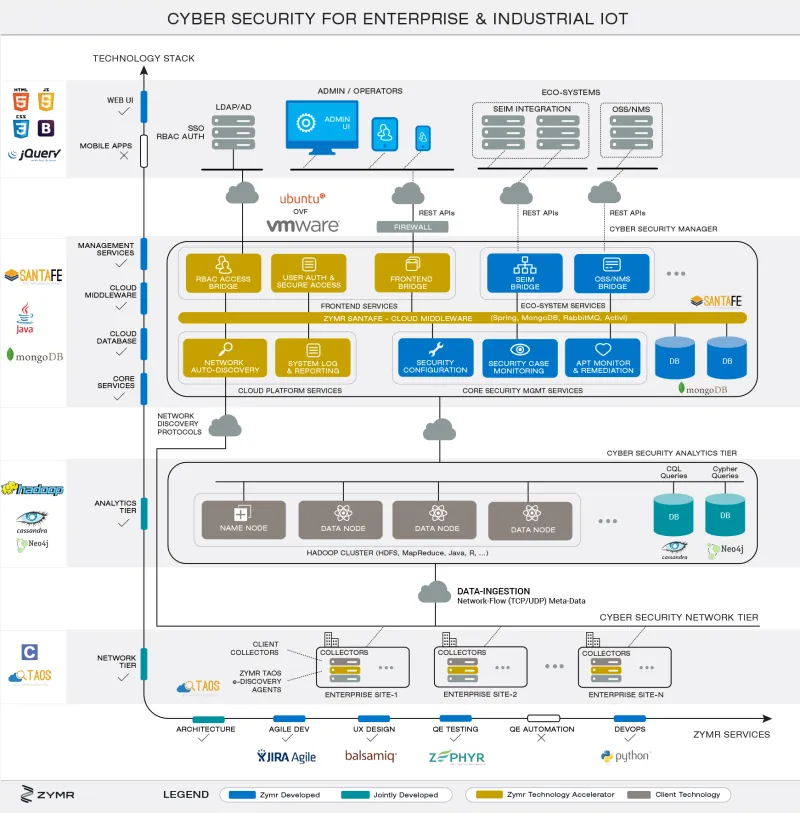
Photo: enterprise cybersecurity authentication system network architecture vulnerability, via d1xzrcop0305fv.cloudfront.net
The prevailing logic behind multi-modal authentication is intuitive: if an attacker must defeat voice biometrics, behavioral analysis, and acoustic environmental verification simultaneously, the probability of a successful breach approaches zero. For years, this reasoning held. Today, it is being systematically dismantled—not by adversaries who have found a way to breach every layer at once, but by those who have learned to identify which layers never actually communicate with each other.
This is the acoustic spoofing problem that enterprise security teams are least prepared to confront. It does not announce itself with failed login attempts or anomalous traffic patterns. It operates quietly, in the architectural margins of authentication stacks that were assembled over time, from multiple vendors, with integration as an afterthought.
The Myth of Unified Multi-Modal Authentication
Most enterprise authentication stacks are not purpose-built, unified systems. They are layered deployments—voice biometric platforms acquired from one vendor, behavioral analytics from another, acoustic environment scoring from a third—wired together through APIs and middleware that were never designed with adversarial modeling in mind.
Each of these systems generates its own trust signal. In theory, a centralized authentication engine aggregates those signals before granting access. In practice, the aggregation logic is frequently opaque, inconsistently applied, and rarely subjected to adversarial testing. Threat actors who invest time in mapping these architectures are not looking for weaknesses in the biometric algorithms themselves. They are looking for something more exploitable: the conditions under which the system will accept a partial match, override a suspicious signal, or grant fallback access when one modality returns an inconclusive result.
Those conditions exist in virtually every enterprise deployment. And they are rarely documented in security audits.
Mapping the Authentication Architecture Before the Attack
Sophisticated adversaries do not approach multi-modal authentication as a monolithic barrier. They approach it as an information problem. Before any spoofing attempt is made, reconnaissance efforts focus on understanding how the target organization's authentication layers interact—or fail to.
This reconnaissance can take several forms. Social engineering campaigns directed at helpdesk personnel can surface information about fallback authentication procedures. Phishing attempts targeting IT staff may yield technical documentation about the authentication stack. In some cases, former employees with institutional knowledge of legacy integrations become unwitting sources of architectural intelligence.
Once an attacker understands that, for example, the behavioral biometric layer only activates after voice verification has already returned a positive result, the attack surface narrows dramatically. The goal is no longer to defeat all three systems. It is to defeat the first gatekeeper convincingly enough that the downstream layers either accept the session or are never fully engaged.
This sequencing vulnerability—what security researchers sometimes refer to as "authentication chaining exploitation"—is among the most underappreciated risks in enterprise identity infrastructure today.
Acoustic Spoofing as the Entry Point
Voice and acoustic layers have emerged as a preferred entry point in multi-modal spoofing campaigns, for reasons that are both technical and practical. Acoustic signals are difficult to authenticate in real time with high confidence. Environmental variables—background noise, microphone quality, network compression artifacts—introduce legitimate variation that authentication systems are trained to tolerate. Attackers exploit that tolerance.
High-quality voice synthesis tools, now widely accessible through commercial and open-source channels, can generate audio samples that pass threshold-based voice biometric checks with alarming consistency. But the more refined attack is not simply playing a deepfake voice sample into a microphone. It is generating an acoustic environment that matches the behavioral and spatial signatures the authentication system expects to observe.
Enterprise employees who regularly authenticate from the same office environment, the same device, and the same network create predictable acoustic fingerprints. An attacker who has harvested sufficient audio data—from recorded conference calls, publicly available media appearances, or compromised communication platforms—can reconstruct not just the voice, but the acoustic context that makes that voice credible to a multi-layer system.
When the acoustic environment score, the voice biometric match, and the behavioral baseline all fall within acceptable parameters, the authentication system has no mechanism to flag the session as suspicious. It was not breached. It was convinced.
The Inconsistency Problem in Signal Aggregation
Even when all modalities are functioning as designed, the aggregation logic that combines their outputs introduces its own vulnerabilities. Most enterprise authentication platforms assign weighted scores to each modality and grant access when the composite score exceeds a defined threshold. The specific weights, thresholds, and override conditions are typically configured during deployment and rarely revisited.
This creates a class of attack that exploits score manipulation rather than outright spoofing. If an attacker can determine that voice biometrics carry sixty percent of the composite weight, a high-confidence voice match may be sufficient to carry a session across the access threshold even when behavioral and acoustic signals are marginal. The system is not failing—it is operating exactly as configured. But the configuration was never stress-tested against an adversary who understood its internal weighting.
The challenge for security teams is that this kind of architectural vulnerability does not surface in standard penetration testing. Most red team engagements test whether individual authentication modalities can be defeated in isolation. Very few test the aggregation logic itself, or model scenarios in which an attacker deliberately engineers a high score on one dimension to compensate for weakness on another.
What Enterprise Security Teams Must Do Differently
Addressing these vulnerabilities requires a shift in how multi-modal authentication is assessed and maintained. Several priorities deserve immediate attention from enterprise security leaders.
Adversarial integration testing must become a standard component of authentication security reviews. It is not sufficient to verify that each modality functions correctly in isolation. Security teams need to understand, and actively test, the conditions under which their aggregation logic can be gamed.
Authentication architecture documentation should be treated as sensitive security material. The details of how modalities interact, what fallback conditions exist, and how override logic is configured represent meaningful intelligence for an adversary. Access to this information should be controlled accordingly.
Acoustic environment validation should be incorporated as an active, continuous layer rather than a static enrollment baseline. If an authenticated session's acoustic profile diverges significantly from established patterns mid-session, that signal should trigger step-up verification rather than being silently absorbed.
Vendor integration reviews should specifically examine the data-sharing architecture between authentication components. If two modalities are not exchanging signals in real time, they are not functioning as a unified system—and the gaps between them are potential attack surface.
The Adversarial Advantage Is Architectural
The security community has invested substantial resources in improving the accuracy of individual biometric modalities. Voice recognition algorithms are more resistant to synthetic audio than they were three years ago. Behavioral analytics engines are more sensitive to subtle anomalies. Acoustic environment scoring has grown more sophisticated.
But adversaries have adapted. The most capable threat actors are no longer trying to defeat these systems on their own terms. They are studying the architecture, identifying the seams, and building attacks that exploit the spaces between layers rather than the layers themselves.
For enterprise security leaders, this demands a corresponding shift in perspective. Multi-modal authentication is not a solved problem because it combines multiple technologies. It is a complex system with complex failure modes—and the most dangerous of those failure modes are the ones that look, to every individual component, like a successful authentication.