When the Environment Becomes the Vulnerability: Voice Biometrics Under Real-World Acoustic Stress
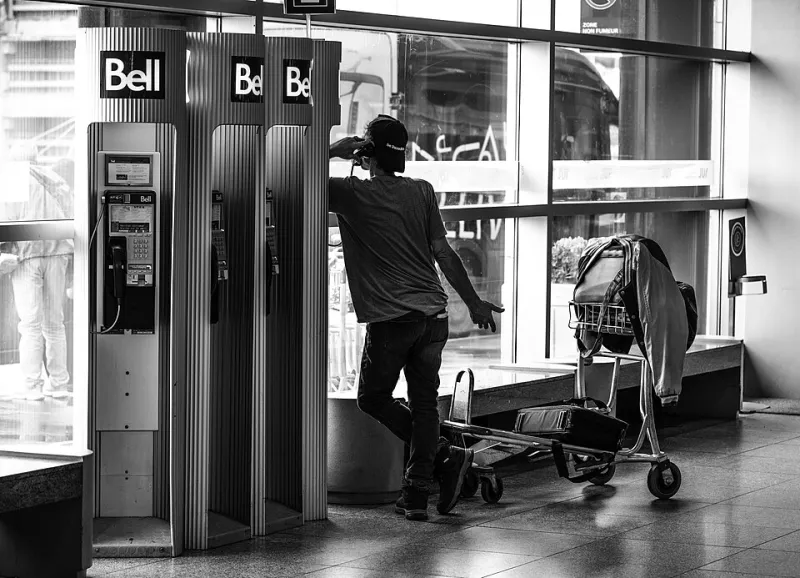
Photo: Wilfredor, CC0, via Wikimedia Commons
Voice biometric authentication has earned a prominent place in enterprise security roadmaps. The promise is compelling: a frictionless, continuous, and physiologically unique identifier that requires no hardware token, no PIN memorization, and no physical proximity to a reader. Yet the organizations investing in these platforms are frequently discovering an uncomfortable truth—the system performs beautifully in the lab and fails unpredictably in the field.
The field, in this context, is a Starbucks in downtown Chicago. It is a home office in suburban Atlanta where a German Shepherd barks at the mail carrier every afternoon. It is a WeWork in San Francisco where seventeen people are conducting seventeen different conversations within earshot of a single open desk. These are the environments where enterprise employees now routinely authenticate, and they represent conditions that most voice biometric systems were never rigorously designed to handle.
The Enrollment-Deployment Gap
At the core of the problem is what security architects sometimes call the enrollment-deployment gap. When a voice biometric system captures an employee's voiceprint during enrollment, it is typically done under reasonably controlled conditions—a quiet office, a quality headset, a stable network connection. The acoustic signature recorded at that moment becomes the reference template against which all future authentication attempts are measured.
The challenge is that voice is not a static biometric. Unlike a fingerprint, which remains relatively consistent regardless of whether its owner is nervous, tired, or standing in a crowded subway station, voice is profoundly sensitive to environmental conditions. Background noise introduces spectral interference that partially masks or distorts the acoustic features the system relies upon. Reverberation in certain physical spaces alters the harmonic structure of speech. Microphone quality varies dramatically across device types, and compression artifacts introduced by consumer-grade audio hardware can strip out the fine-grained frequency information that distinguishes one voiceprint from another.
When the acoustic profile of an authentication attempt diverges significantly from the enrollment template, the system faces a binary choice: accept a potentially degraded match or reject a legitimate user. Both outcomes carry consequences.
False Rejections as a Security Problem, Not Just a UX Problem
Industry discourse tends to frame false rejections primarily as a user experience issue—frustrated employees locked out of systems, productivity interrupted, helpdesk tickets generated. These are real costs. But the security implications of high false rejection rates are equally serious and considerably less discussed.
When voice authentication consistently fails in noisy environments, employees find workarounds. They switch to fallback authentication methods—often password-based or PIN-based systems that represent a regression to lower-security postures. In some organizational contexts, repeated authentication failures lead IT administrators to relax authentication thresholds, effectively reducing the system's discriminatory power in order to reduce friction. In both scenarios, the acoustic noise that caused the initial false rejection has indirectly weakened the organization's authentication posture.
There is also a subtler dynamic at work. High-noise environments that generate false rejections for legitimate users may simultaneously lower the effective threshold at which an attacker's attempt—perhaps a synthesized voice or a recorded sample—achieves a passing score. When a system is calibrated to accommodate degraded acoustic conditions, it becomes less capable of distinguishing between a genuine user struggling with background noise and a fraudulent attempt that happens to share certain degraded acoustic characteristics.
What Vendors Are—and Are Not—Doing
The voice biometric vendor community is not unaware of these challenges. Noise cancellation and acoustic preprocessing have become standard features in enterprise-grade platforms, with many vendors incorporating deep learning-based noise suppression that can isolate speech from complex ambient soundscapes in real time. Channel compensation techniques attempt to normalize audio signals across different microphone types and compression codecs. Some platforms now offer continuous authentication models that aggregate multiple short voice samples over the course of a session, reducing the dependence on any single high-quality authentication moment.
These are meaningful advances. But they introduce their own complications. Aggressive noise suppression can inadvertently remove acoustic features that are diagnostically important for speaker verification. Models trained on noise-compensated audio may perform differently from those trained on clean speech, requiring separate enrollment procedures or adaptive re-enrollment workflows. And the computational overhead of real-time acoustic preprocessing can introduce latency that, in latency-sensitive authentication contexts, degrades the user experience in a different but equally frustrating way.
Perhaps most significantly, the diversity of real-world acoustic environments is vast enough that no single preprocessing pipeline can accommodate all of them gracefully. A model optimized for open-plan office noise may perform poorly in a reverberant home kitchen. A system tuned for mobile device microphones may struggle when an employee switches to a laptop's built-in microphone in a coffee shop.
Enterprise Guidance: Designing for Environments You Cannot Control
For security and IT leaders evaluating or deploying voice biometric authentication, several operational principles have emerged from organizations that have navigated these challenges successfully.
Conduct acoustic environment audits before deployment. Rather than assuming that voice authentication will perform uniformly across the workforce, map the actual acoustic environments in which employees authenticate. Remote workers, field staff, and employees in open-plan settings represent distinct acoustic profiles that should inform system configuration and threshold calibration.
Implement adaptive enrollment workflows. Static enrollment, conducted once under controlled conditions, is insufficient for workforces that operate across varied environments. Consider requiring employees to complete supplemental enrollment samples in the acoustic conditions they most frequently encounter. Some platforms support dynamic template updating that incorporates successful authentication events over time, gradually improving match accuracy as the system learns an individual's real-world acoustic context.
Define explicit fallback authentication policies. Rather than allowing ad hoc workarounds when voice authentication fails, establish formal fallback procedures that maintain an acceptable security posture. Fallback methods should be subject to the same risk assessment as primary authentication mechanisms, and their use should be logged and reviewed for patterns that may indicate systemic acoustic performance issues.
Evaluate vendors on noisy-environment benchmarks specifically. Standard vendor performance claims—equal error rates, false acceptance rates, false rejection rates—are typically derived from clean or lightly noisy test conditions. Request performance data that reflects the specific acoustic environments your workforce inhabits. Vendors who cannot provide this data, or who resist doing so, are signaling something important about the real-world maturity of their platform.
Treat acoustic performance as an ongoing operational metric. Voice biometric accuracy should be monitored continuously rather than evaluated once at deployment. Authentication failure rates, segmented by employee location type and device category, can surface acoustic performance degradation before it becomes a security or productivity crisis.
The Broader Lesson
The difficulties that noisy environments pose for voice biometric systems are not merely a vendor problem or a technology problem. They are a deployment philosophy problem. Enterprise authentication strategies have historically been designed around controlled physical environments—the corporate office, the managed device, the supervised access point. The distributed workforce has shattered those assumptions.
Organizations that deploy voice biometrics as though their employees work in acoustically predictable spaces are building security architecture on a foundation that does not reflect operational reality. The acoustic signature an employee produces in a quiet conference room and the acoustic signature they produce in a crowded airport terminal are, from a biometric standpoint, meaningfully different events. Authentication systems that cannot accommodate that difference will fail—not occasionally, but systematically, and in ways that create both user frustration and security exposure.
The path forward requires vendors to invest more seriously in acoustic adaptability and enterprises to invest more seriously in understanding the acoustic realities of their distributed workforces. Voice biometrics remain a powerful authentication modality. But their value is contingent on deployment approaches that take the full complexity of real-world sound seriously.