Pocket-Sized Vulnerabilities: How Personal Devices Are Quietly Dismantling Enterprise Authentication Perimeters
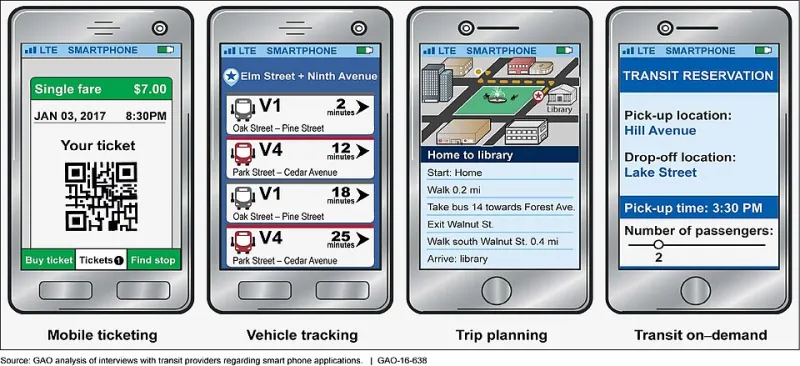
Photo: U.S. Government Accountability Office from Washington, DC, United States, Public domain, via Wikimedia Commons
For nearly a decade, enterprise IT leadership has wrestled with the dual mandate of enabling workforce mobility while preserving network integrity. BYOD policies emerged as a pragmatic compromise — employees gained flexibility, organizations reduced hardware costs, and productivity metrics improved across the board. What those early policy frameworks did not adequately anticipate, however, was the acoustic dimension of the problem.
Personal devices do not simply connect to enterprise networks. They listen. They process. They transmit. And in doing so, they create a category of authentication risk that sits well outside the boundaries of conventional endpoint security.
The Listening Layer Nobody Audited
When an employee walks into a secure office carrying a smartphone, a smartwatch, and a pair of wireless earbuds, they are introducing at minimum three independent microphone arrays into the environment. Each of these devices operates under its own permission model, its own data retention policy, and its own relationship with third-party cloud infrastructure — none of which falls under the enterprise's direct control.
The implications for authentication security are substantial. Consider a routine scenario: a help desk technician verbally confirms a temporary password reset with a remote colleague while seated in an open workspace. That exchange, entirely ordinary from a workflow perspective, occurs within acoustic range of multiple personal devices whose microphone activity cannot be audited, logged, or governed by the organization's security stack.
This is not a theoretical concern. Voice-activated features on consumer devices are designed to remain in a persistent low-power listening state, waiting for trigger phrases. The audio processing that occurs during this state — even prior to a confirmed activation — represents a capture window that security teams have no visibility into and no mechanism to control under standard BYOD governance frameworks.
Smartwatches and the Wrist-Level Attack Surface
Smartphones receive the majority of attention in enterprise device management conversations, but wearables present a distinct and underappreciated risk profile. Modern smartwatches incorporate microphones capable of capturing conversational audio at ranges exceeding what most users assume. Several leading consumer wearable platforms include always-on voice features enabled by default, with opt-out mechanisms buried several layers deep in settings menus that most employees never navigate.
Within an enterprise context, a smartwatch worn during a sensitive authentication workflow — a multi-factor verification call, a biometric enrollment session, or a verbal authorization exchange — can capture acoustically rich data without triggering any of the organization's existing monitoring infrastructure. Because wearables typically pair with smartphones rather than connecting directly to enterprise networks, they frequently fall outside the scope of mobile device management platforms entirely.
Security architects who have invested in robust endpoint controls for laptops and corporate-issued phones may find that the wrist-level gap in their coverage is wider than they realized.
Voice Assistants as Unregistered Network Participants
The proliferation of embedded voice assistant technology compounds these risks in ways that are difficult to quantify but straightforward to understand conceptually. Consumer voice assistant platforms — whether integrated into smartphones, smart speakers employees bring for desk use, or wearable devices — are designed to optimize for user convenience, not enterprise security compliance.
From an acoustic security standpoint, a voice assistant operating within a secure facility functions as an unregistered participant in every sensitive conversation that occurs within its capture radius. Unlike corporate communication tools, which are subject to data governance policies, retention schedules, and access controls, consumer voice assistant platforms transmit audio data to commercial cloud infrastructure governed by consumer-grade privacy terms.
For organizations operating in regulated industries — financial services, healthcare, defense contracting — the presence of these devices in environments where authentication credentials, access codes, or personally identifiable information are routinely discussed represents a compliance exposure that deserves formal treatment in risk registers.
Mapping the Acoustic Perimeter Under BYOD Conditions
Addressing this challenge begins with a step that most organizations have not yet taken: formally mapping the acoustic perimeter of sensitive spaces under realistic BYOD operating conditions. This process differs meaningfully from a conventional physical security audit.
An acoustic perimeter assessment should account for the density of personal devices present during typical working hours, the microphone sensitivity profiles of commonly carried consumer hardware, the proximity of device-heavy zones to spaces where authentication-relevant conversations occur, and the data transmission behaviors of the operating systems and applications running on those devices.
Organizations that have conducted this type of assessment frequently discover that their formal secure zones — conference rooms designated for privileged discussions, executive floors with access restrictions, IT operations centers — offer acoustic isolation from external parties but provide no meaningful protection against the devices already inside the perimeter carried by trusted employees.
Practical Protocols That Preserve Productivity
The response to this risk does not require organizations to prohibit personal devices outright, a policy that would encounter significant employee resistance and create its own set of operational complications. More proportionate and sustainable approaches exist.
Physical acoustic isolation remains one of the most reliable controls available. Designated device-free zones within sensitive spaces — particularly in areas where authentication workflows are regularly conducted — can substantially reduce the risk of inadvertent capture without imposing broad restrictions on device use. These zones can be implemented with minimal infrastructure investment and communicated through standard security awareness training.
For organizations with higher risk profiles, acoustic masking technology provides an additional layer of protection. White noise systems and speech privacy solutions designed for enterprise deployment can render conversational audio unintelligible to microphones operating beyond a defined radius, effectively neutralizing the capture capability of nearby personal devices without requiring employees to surrender them.
At the policy level, BYOD governance frameworks should be updated to explicitly address acoustic risk. This includes requiring employees to disable voice assistant features when operating in designated sensitive areas, establishing clear expectations around device behavior during authentication workflows, and incorporating acoustic security considerations into the onboarding and annual security training curricula.
The Governance Gap That Needs Closing
Perhaps the most significant obstacle to progress in this area is organizational rather than technical. Acoustic security sits at the intersection of physical security, IT governance, and compliance — a jurisdictional space where accountability is often diffuse and ownership is frequently contested.
CISOs who have built strong programs around network security and endpoint management may find that acoustic risk falls just outside their traditional mandate. Physical security teams, meanwhile, may lack the technical vocabulary to engage with microphone-level threat modeling. Closing this gap requires deliberate cross-functional alignment, with explicit ownership assigned to the acoustic dimension of enterprise authentication security.
The personal devices in your employees' pockets are not adversarial by design. But in an environment where authentication credentials carry significant value and acoustic capture has never been more accessible, the absence of a deliberate governance framework is itself a vulnerability. The organizations that recognize this now will be considerably better positioned than those that encounter it during an incident response.