Sound as Identity: How Ambient Acoustic Fingerprinting Is Redefining Enterprise Authentication

Photo: Amanda.yuu, CC BY 4.0, via Wikimedia Commons
In the ongoing effort to harden enterprise authentication, security architects have explored everything from hardware tokens to behavioral biometrics. Yet one factor has remained largely underutilized despite its remarkable specificity: the acoustic environment itself. The room you work in, the building you occupy, the infrastructure humming around you — each produces a composite sound profile that is, in practical terms, unique. Enterprises that have begun treating this profile as an authentication variable are discovering a layer of identity verification that is both passive and profoundly difficult to spoof.
The concept is not as abstract as it might initially appear. Acoustic fingerprinting — the process of capturing, analyzing, and comparing ambient sound patterns — has matured considerably as a technology discipline. What began as a tool for music recognition and audio watermarking has evolved into a viable mechanism for environmental identification. Applied to enterprise authentication, it offers something that passwords, PINs, and even many biometric modalities cannot: a continuously present, contextually grounded signal that reflects where a user is, not merely who they claim to be.
The Physics Behind the Fingerprint
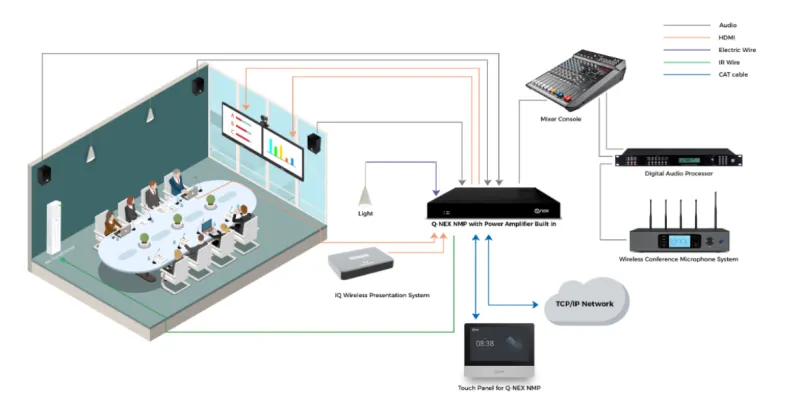
Every enclosed space has an acoustic character determined by its dimensions, materials, furnishings, and the mechanical systems operating within it. A server room in a Chicago data center produces a different ambient profile than a glass-walled conference room in a San Francisco high-rise. HVAC systems, electrical transformers, nearby traffic patterns, elevator machinery, and even the density of occupants all contribute measurable acoustic data. When captured through a standard microphone — including those already embedded in enterprise laptops, mobile devices, and smart speakers — this data can be processed to generate a statistical fingerprint of the environment.
Authentication systems built on this principle compare the acoustic fingerprint captured at login against a stored baseline established during a trusted enrollment session. Significant deviations from that baseline — indicating the user is operating from an unexpected environment — can trigger step-up authentication requirements, alert security operations teams, or, in high-assurance contexts, deny access entirely. The process occurs in near-real time and requires no active participation from the end user beyond the act of attempting to authenticate.
Deployment Realities: Where Acoustic Authentication Is Taking Hold
Several enterprise deployment contexts have proven particularly receptive to acoustic authentication as a supplementary factor.
Remote and hybrid workforces represent the most pressing use case. As organizations distributed their workforce across home offices, co-working spaces, and satellite locations, the perimeter-based security assumptions of traditional authentication collapsed. A credential verified at a corporate headquarters carries different risk weight than the same credential presented from an uncontrolled home environment. Acoustic fingerprinting allows enterprises to establish trusted acoustic profiles for approved remote work locations — a home office, a designated co-working facility — and flag authentication attempts originating from acoustically unrecognized environments without requiring users to carry additional hardware.
Financial services and legal sectors, where regulatory obligations around access control are substantial, have been early adopters. In these environments, demonstrating that access to sensitive systems occurred from verified, controlled locations is not merely a security preference — it carries compliance implications. Acoustic environmental verification provides an auditable, technically defensible record of where access events originated, supplementing log data with a physical-world dimension that pure network telemetry cannot supply.
Secure operations centers and controlled facilities present a different but equally compelling use case. In environments where physical access is already tightly managed, acoustic fingerprinting adds a logical authentication layer that reinforces physical controls. An employee whose badge grants access to a secure room should, in theory, be authenticating to systems from within that room. Acoustic verification creates a mechanism to confirm that logical access and physical presence are aligned — a correlation that legacy systems rarely achieve.
The Spoofing Challenge: Why Acoustic Environments Are Hard to Fake
Any discussion of acoustic authentication must address the obvious adversarial question: can an attacker simply play a recording of a trusted acoustic environment to deceive the system? The answer, in well-implemented deployments, is no — and the reasons illuminate why this modality is genuinely robust rather than merely novel.
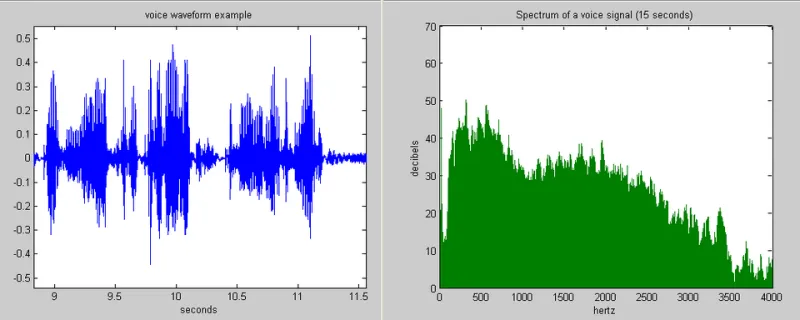
Sophisticated acoustic fingerprinting systems do not rely on static recordings. They capture dynamic, real-time acoustic data and apply liveness detection techniques analogous to those used in facial recognition to distinguish live environments from playback. The acoustic interaction between a playback device and a physical space introduces measurable artifacts — spectral distortions, phase anomalies, and frequency response characteristics — that differ detectably from a genuinely live environment. An attacker attempting to replay a trusted acoustic profile through a speaker would, in effect, be creating a new acoustic environment that includes both the playback content and the acoustic signature of wherever the attack is being staged.
Further, acoustic profiles are not static. They evolve with occupancy patterns, seasonal HVAC cycles, and ambient changes in the surrounding environment. Systems designed to accommodate this natural drift while remaining sensitive to abrupt, anomalous changes are substantially more resistant to both replay attacks and environmental manipulation than a static comparison approach would suggest.
Integration Within Multi-Factor Architecture
Acoustic fingerprinting is not positioned as a standalone authentication solution. Its greatest value is realized as one factor within a layered, multi-modal authentication framework. Combined with device attestation, behavioral biometrics, and conventional credentials, acoustic environmental verification addresses a gap that other factors leave open: the physical context of the authentication event.
For organizations operating under Zero Trust principles, this contextual dimension is particularly relevant. Zero Trust frameworks demand continuous verification of user, device, and context — yet most implementations focus heavily on the first two while treating context as a network-layer abstraction. Acoustic authentication introduces a physical-world signal into that contextual assessment, grounding identity verification in observable, real-world conditions rather than network attributes alone.
Enterprise identity platforms and authentication middleware are increasingly accommodating acoustic signals through API-level integrations, allowing security teams to incorporate acoustic factors without replacing existing authentication infrastructure. This compatibility with established enterprise identity stacks lowers the barrier to adoption and accelerates time-to-value for organizations exploring acoustic authentication for the first time.
Strategic Considerations for Security Leadership
For CISOs and enterprise security architects evaluating acoustic authentication, several practical considerations merit attention. Enrollment processes must be designed carefully to capture representative acoustic baselines across all approved work environments, including the variability inherent in remote settings. Privacy implications — specifically, the ongoing capture of ambient audio — require clear policy frameworks and transparent communication with employees, particularly in states with robust employee privacy protections.
Data minimization principles should govern acoustic authentication implementations. The goal is environmental fingerprinting, not audio surveillance; systems should be architected to process and discard raw audio locally, retaining only the derived acoustic feature vectors necessary for comparison. This design approach both addresses privacy concerns and reduces the data liability associated with storing sensitive audio.
The organizations that will benefit most from acoustic authentication are those willing to treat sound not as background noise but as signal — a continuous, contextually rich stream of identity-relevant information that their environments are already producing. The infrastructure to capture it is already in place. The question is whether enterprise security strategy is sophisticated enough to listen.