Synthetic Voices, Real Breaches: Why Enterprise Voice Authentication Is Losing the Arms Race
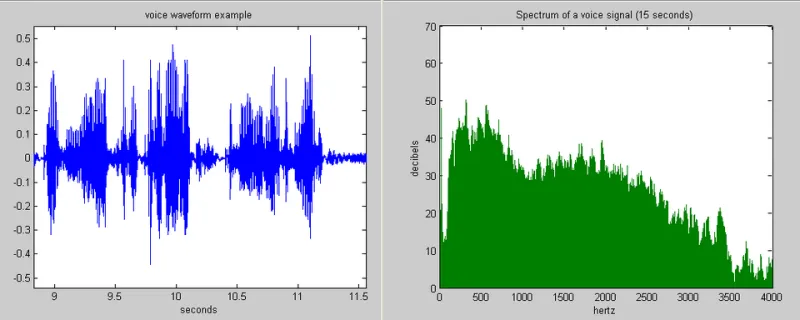
Photo: Bob K at English Wikipedia, Public domain, via Wikimedia Commons
In the spring of 2023, a multinational energy company operating out of the United Kingdom transferred approximately $243,000 to a fraudulent account after its CEO was convinced — by phone — that his parent company's chief executive had urgently requested the wire. The voice on the line was not human. It was a synthetic audio clone, rendered with sufficient fidelity to replicate the executive's accent, cadence, and speech patterns. The incident was not an anomaly. It was a preview.
For enterprise security teams across the United States, that case has since become a cautionary reference point. Yet the threat has grown considerably more sophisticated in the intervening years. What once required expensive studio equipment and skilled audio engineers can now be replicated by moderately technical adversaries using commercially available tools — and in some cases, tools that are freely accessible online.
The Commoditization of Voice Cloning
The barrier to entry for acoustic impersonation has collapsed. Platforms originally developed for entertainment, accessibility, and content creation have inadvertently furnished bad actors with the infrastructure to clone voices from as little as three seconds of publicly available audio. Earnings calls, investor presentations, LinkedIn video posts, media interviews — the modern executive leaves an extensive acoustic footprint across the internet, often without recognizing the exposure that footprint represents.
Researchers at several US-based cybersecurity firms have demonstrated that contemporary text-to-speech synthesis models can now reproduce not just a speaker's tonal characteristics but also their micro-prosodic patterns — the subtle rhythmic and intonational signatures that legacy voice biometric systems were specifically trained to detect as markers of authentic identity. In controlled evaluations, some of these synthetic samples have achieved pass rates exceeding 80 percent against commercial voice authentication platforms.
The implication is direct: an authentication layer that enterprise organizations deployed as a security upgrade may now function as a vulnerability.
How Attacks Are Structured
Acoustic impersonation attacks against enterprises rarely operate in isolation. Security analysts who have investigated these incidents describe a consistent operational pattern. The adversary begins with open-source intelligence gathering, compiling audio samples of the target executive from publicly accessible sources. Those samples are processed through a voice synthesis engine to produce a cloned model. The model is then used to conduct social engineering attacks — typically targeting financial operations staff, IT help desks, or executive assistants who are conditioned to respond promptly to perceived requests from senior leadership.
In more sophisticated campaigns, synthetic audio is embedded within what appear to be legitimate communication channels. Attackers have spoofed caller ID metadata, manipulated voicemail systems, and in at least several documented cases, introduced synthetic voice content into enterprise collaboration platforms by compromising peripheral access credentials.
The combination of acoustic authenticity and contextual legitimacy — a familiar voice, a plausible request, a trusted platform — creates a social engineering scenario that neither technical controls nor employee awareness training have consistently been able to neutralize.
The Limits of Traditional Voice Biometrics
Voice biometric systems were architected around a foundational assumption: that the acoustic properties of a human voice are sufficiently unique and difficult to replicate that they constitute a reliable authentication signal. That assumption held for more than a decade. It no longer holds unconditionally.
The core challenge is not that voice biometrics are inherently flawed — it is that they were not designed to operate in an adversarial environment where synthesis technology evolves faster than detection models can be retrained. Most deployed voice authentication systems rely on static enrollment profiles and pre-trained liveness detection algorithms. Adversaries who understand these systems — and published academic literature has made their architecture increasingly transparent — can engineer synthetic audio specifically calibrated to evade detection thresholds.
Liveness detection, which attempts to distinguish recorded or synthesized audio from live human speech, has improved substantially. But the gap between attack capability and detection capability remains uncomfortably narrow, and in some deployment configurations, the attacker currently holds the advantage.
Building Layered Acoustic Defense
The security community's response to this threat is converging on a layered approach that treats voice as one signal among several rather than a standalone authentication mechanism. This means integrating voice biometrics with behavioral analytics, contextual risk scoring, and continuous authentication models that evaluate not just the initial login event but the ongoing acoustic and behavioral characteristics of a session.
Enterprise organizations are also beginning to invest in anti-spoofing detection systems specifically designed to identify the spectral artifacts that synthetic audio tends to introduce — artifacts that are imperceptible to human listeners but detectable through signal analysis. These systems function as a parallel verification layer, operating independently of the primary biometric comparison and flagging anomalies for human review or step-up authentication.
On the policy side, leading organizations are revisiting the authorization workflows that voice authentication gates. The principle of least privilege, long applied to digital access controls, is being extended to voice-authorized financial transactions and data access requests. No single authentication signal — including a recognized voice — should be sufficient to authorize high-value actions without corroborating verification.
The Intelligence Dimension
Perhaps the most underappreciated element of acoustic threat management is the intelligence function. Enterprises that have built mature security operations capabilities are beginning to monitor for indicators of acoustic reconnaissance — unusual patterns of access to executive audio content, the emergence of synthetic audio samples on dark web forums, or the registration of domains that mimic internal communication platforms.
This proactive posture reflects a recognition that acoustic attacks, like most sophisticated threat vectors, are preceded by a preparation phase. Disrupting that phase — before a synthetic voice reaches a help desk agent or a financial operations team — is considerably more effective than attempting to detect the attack in real time.
What Comes Next
The trajectory of this threat is not ambiguous. Voice synthesis technology will continue to improve. The acoustic fingerprints of senior executives will continue to proliferate across public channels. And the organizational incentives that make social engineering effective — deference to authority, urgency, familiarity — will not be eliminated by awareness training alone.
Enterprise security leaders who treat voice authentication as a solved problem are operating on an outdated risk model. The organizations best positioned to defend against acoustic impersonation are those that have accepted a more uncomfortable truth: that every authentication signal exists on a spectrum of reliability, and that spectrum shifts as adversarial capabilities advance.
The arms race is not hypothetical. It is already underway, and the enterprises that recognize that reality earliest will be the ones best equipped to compete in it.