Zero Trust's Acoustic Blind Spot: How Sound-Based Attack Vectors Are Undermining Enterprise Security Frameworks

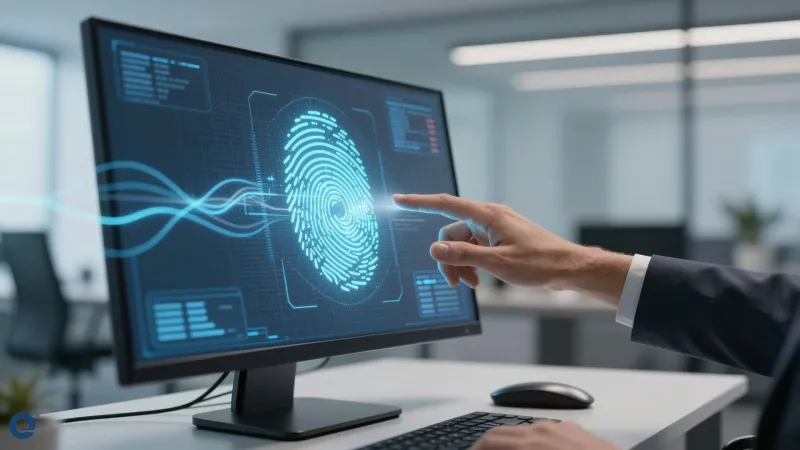
Photo: enterprise security professional analyzing sound waves on computer screen in dark server room, via img.freepik.com
The Architecture That Forgot to Listen
Zero-trust security has reshaped how enterprise IT organizations think about perimeter defense. The foundational premise — trust nothing, verify everything — has driven billions of dollars in investment across identity management, endpoint detection, and network segmentation. Yet for all its rigor, zero-trust architecture contains a structural omission that sophisticated threat actors have begun to exploit with increasing regularity: it was designed around digital signals, and the physical world produces a great deal more than those.
Acoustic attack vectors — techniques that extract sensitive information from sound — occupy an unusual position in the enterprise threat landscape. They are well-documented in academic literature, demonstrated repeatedly at security conferences, and almost entirely absent from the formal risk registers of most US organizations. That disconnect represents an exploitable gap, and adversaries operating at the nation-state and advanced persistent threat level are aware of it.
What Acoustic Eavesdropping Actually Looks Like in Practice
The term "acoustic eavesdropping" conjures images of a microphone pressed against a wall, but modern acoustic exploitation is considerably more sophisticated — and considerably more threatening to enterprise environments.
Keyboard acoustic analysis is among the most mature attack classes. Research has demonstrated that the acoustic signature of individual keystrokes is sufficiently distinctive that a trained model — built from relatively brief sample recordings — can reconstruct typed content with accuracy rates exceeding 90 percent under controlled conditions. In a practical enterprise scenario, this means a compromised conference room microphone, a nearby smartphone running a recording application, or even a voice-over-IP system with an open channel can serve as a covert data exfiltration instrument. Passwords, authentication tokens, and sensitive communications typed within acoustic range become vulnerable without any direct compromise of the device itself.
Voice authentication spoofing introduces a second and increasingly urgent attack surface. As enterprises adopt voice-based authentication for call center access, executive communication platforms, and physical access control, adversaries have developed synthesis techniques capable of generating convincing voice replicas from limited source audio. Publicly available executive interviews, earnings calls, and conference presentations provide ample raw material. A voice authentication system that has not been hardened against synthetic audio injection may accept a spoofed credential with no indication of anomaly.
Acoustic side-channel attacks on hardware represent a third vector, particularly relevant for high-security environments. Cryptographic operations performed by servers, workstations, and security modules produce faint but measurable acoustic emissions. Under the right conditions — physical proximity, sensitive recording equipment, and sufficient processing time — these emissions can be analyzed to recover cryptographic keys. While this attack class demands greater resources than keyboard analysis or voice spoofing, it is well within the capability set of nation-state actors targeting US defense contractors, financial institutions, and critical infrastructure operators.
Why Zero-Trust Frameworks Miss These Threats
Zero-trust architecture, as implemented across most enterprise environments, operates at the network and identity layer. It validates device posture, enforces least-privilege access, and monitors digital traffic for behavioral anomalies. What it does not do — and was never designed to do — is assess the physical acoustic environment in which authenticated sessions occur.
Consider a scenario in which an employee authenticates successfully through a zero-trust identity provider, accesses a sensitive internal system, and begins entering data. Every element of that transaction may pass zero-trust validation cleanly. The device is compliant. The credentials are valid. The session behavior is unremarkable. But if a malicious actor has placed a recording device within acoustic range of that workstation, the keystrokes entered during that session may be reconstructed and analyzed hours later. The breach occurs entirely outside the visibility envelope of the security framework.
This is not a failure of zero-trust as a concept. It is a recognition that no purely digital security architecture can fully account for physical world attack surfaces — and that enterprise security programs must extend their scope accordingly.
Assessing Your Organization's Acoustic Attack Surface
For security teams ready to conduct a formal acoustic risk assessment, a structured methodology should address three primary domains.
Physical environment mapping begins with identifying all spaces where sensitive authentication events and confidential communications occur. This includes executive offices, secure conference rooms, data center access points, and any location where voice-based authentication is used. For each space, assessors should document the acoustic characteristics — room size, surface materials, ambient noise levels — and identify potential recording vantage points both inside and adjacent to the facility.
Device and system inventory should catalog every audio-capable device within or near sensitive areas. This includes not only dedicated recording hardware but smartphones, laptops with active microphones, VoIP endpoints, smart speakers, and building management systems with audio components. Each device represents a potential acoustic collection point, whether compromised by an external actor or misconfigured by an internal one.
Authentication system review should evaluate every voice-based or keyboard-dependent authentication mechanism for acoustic attack resistance. This means examining whether voice authentication platforms employ liveness detection and anti-spoofing measures, whether keyboard input in sensitive contexts is protected by acoustic dampening or alternative input methods, and whether hardware security modules are deployed in environments that could plausibly allow acoustic side-channel access.
Remediation Priorities for Enterprise Security Teams
Not every acoustic vulnerability demands the same remediation investment. Prioritization should follow a risk-weighted approach that considers the sensitivity of the assets accessible from a given location and the plausibility of acoustic access by a motivated adversary.
For high-priority environments, physical countermeasures — acoustic dampening materials, white noise generation systems, and secure room designs that attenuate sound transmission — provide a meaningful reduction in exploitability. These measures are well-established in government and defense contexts and are increasingly available through commercial security integrators serving the private sector.
For voice authentication systems, procurement and configuration standards should mandate liveness detection, replay attack resistance, and synthetic voice detection capabilities. These features are available in enterprise-grade platforms and should be treated as non-negotiable requirements rather than optional enhancements.
For keyboard-based credential entry in sensitive contexts, organizations should evaluate hardware security keys, biometric authentication alternatives, and on-screen keyboard options that eliminate acoustic keystroke signature entirely. The goal is to remove the acoustic signal, not merely to obscure it.
Closing the Gap Before Adversaries Exploit It
The acoustic attack surface is not theoretical. The techniques are documented, the tools are accessible, and the targets — enterprise authentication systems, executive communications, and sensitive data entry workflows — are identifiable by any adversary with basic reconnaissance capability.
Zero-trust architecture remains a sound foundation for enterprise security. But sound, in this context, is precisely the problem. Organizations that extend their security assessment discipline to include acoustic vectors will close a vulnerability that most of their peers have not yet acknowledged. In an environment where adversaries are actively seeking the path of least resistance, that acknowledgment may prove to be a decisive advantage.