Always Listening, Rarely Secured: The Hidden Acoustic Risk Embedded in Enterprise IoT Infrastructure
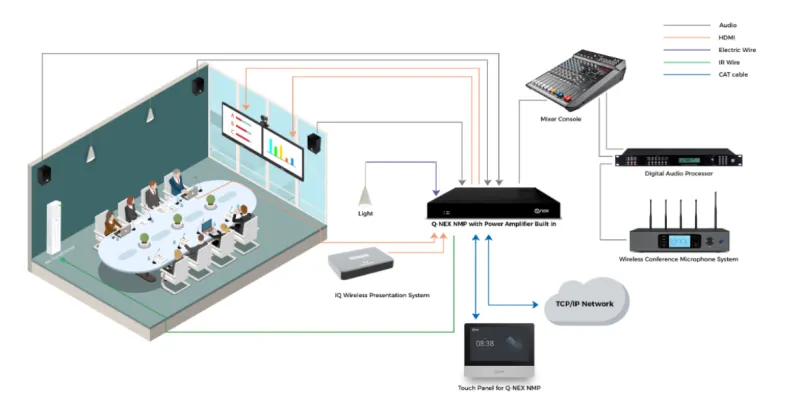
Photo: smart conference room microphone IoT device enterprise security office, via www.systemsintegrationasia.com
The Device You Trusted Is Now a Liability
Walk through any modern American corporate campus and the density of listening hardware is striking. Smart speakers sit on executive desks. Conference room platforms with integrated microphone arrays await the next all-hands call. AI-enabled security cameras equipped with audio capture monitor lobbies and server corridors. Each of these devices was procured, provisioned, and deployed with a specific operational purpose in mind. What most enterprise procurement and security teams failed to fully account for was the secondary function these devices now perform: continuous acoustic data collection.
This is not a theoretical concern. It is an operational reality that sits at the intersection of three disciplines that rarely speak to one another — IoT security, acoustic biometrics, and regulatory compliance. The result is a gap in enterprise security posture that is both technically significant and surprisingly underexamined.
What "Always-On" Actually Means for Your Authentication Surface
The term "always-on" is typically used as a marketing feature. In the context of enterprise security, it describes something more troubling: a persistent, network-connected audio capture device operating within the physical perimeter of your organization, often with minimal oversight and inconsistent security hardening.
Consider the practical implications. A voice-activated conference room system installed in a space where senior leadership regularly discusses authentication credentials, access protocols, or sensitive system configurations is passively recording acoustic signatures. Depending on the vendor, those audio streams may be processed locally, transmitted to cloud infrastructure, or buffered in device memory in ways that are not always transparent to the enterprise IT team that manages the deployment.
When those acoustic streams include the voices of individuals who are also enrolled in a corporate voice biometric system — for application access, call center authentication, or secure facility entry — the exposure extends beyond simple privacy risk. The captured audio becomes a potential source of biometric data that could be harvested, replayed, or used to construct synthetic voice profiles capable of defeating authentication controls.
The Compliance Dimension Most Frameworks Are Missing
Regulatory frameworks governing enterprise data security in the United States have moved aggressively to address biometric data in recent years. Illinois' Biometric Information Privacy Act remains the most aggressive state-level instrument, but similar frameworks have emerged or are advancing in Texas, Washington, and California. At the federal level, sector-specific guidance from the FTC and NIST increasingly treats biometric data as a protected category requiring explicit governance.
Here is the compliance gap that deserves closer scrutiny: most enterprises that have implemented voice biometric authentication have done so with careful attention to the enrollment and verification pipeline. They have documented consent procedures, retention schedules, and access controls for the biometric authentication system itself. What they have not done, in the majority of cases, is extend that governance posture to the ambient IoT devices operating in the same physical environments where enrolled users regularly speak.
If a smart conference room platform captures audio of an enrolled user, and that audio is sufficient to reconstruct or approximate a biometric voice profile, the question of whether that capture constitutes biometric data collection under applicable law is not a settled one. What is clear is that enterprises that have not addressed this question are carrying undisclosed compliance risk.
How Attackers Are Thinking About This Surface
The threat model here is more sophisticated than opportunistic eavesdropping. Security researchers and, increasingly, threat actors operating at the enterprise level understand that IoT devices represent a low-friction path to acoustic data that would otherwise require direct access to a secured authentication system.
The attack chain is worth mapping explicitly. An adversary seeking to compromise a voice-authenticated enterprise system faces two primary obstacles: obtaining a sufficiently high-quality audio sample of an enrolled user's voice, and defeating any liveness detection controls the authentication system employs. Traditional approaches to the first obstacle — phishing calls, social engineering, or compromising personal devices — carry detection risk and require targeted effort.
A poorly secured IoT device operating within the enterprise environment reduces that obstacle considerably. If a threat actor can access the audio stream or stored recordings of a device that has captured the target user's voice in a natural, unguarded context, they have acquired raw material of considerably higher quality than most social engineering approaches would yield. Combined with modern voice synthesis tools, that raw material becomes a functional attack asset.
Practical Steps for Closing the Gap
Addressing this vulnerability does not require enterprises to eliminate IoT devices from their environments — a step that would be operationally untenable for most organizations. It does require a structured approach to acoustic risk governance that most security programs have not yet formalized.
The first step is inventory and classification. Enterprises should conduct a systematic audit of all network-connected devices with audio capture capability, mapping their physical locations against the spaces where voice-authenticated users operate. This intersection defines the highest-priority risk zone.
The second step is technical hardening. IoT devices in sensitive acoustic environments should be subject to the same security configuration standards applied to endpoint devices — firmware update enforcement, network segmentation, encrypted transmission requirements, and logging of audio capture events where technically feasible.
The third step is vendor scrutiny. Enterprise procurement teams should require explicit disclosure from IoT vendors regarding audio data handling, cloud transmission practices, retention schedules, and access controls. Vendors unable or unwilling to provide this documentation should be treated as high-risk suppliers in any environment where voice biometric authentication is in use.
Finally, organizations should consider extending their biometric data governance policies to explicitly address ambient capture risk. This means working with legal and compliance teams to determine whether existing consent frameworks and data handling procedures are adequate in light of the IoT devices operating in enrolled users' workspaces.
The Acoustic Perimeter Is Already Inside Your Building
Enterprise security has long operated on the principle that the perimeter must be defended. The challenge posed by always-listening IoT devices is that the acoustic attack surface they create does not exist at the network boundary — it exists inside conference rooms, executive suites, and the common areas where your organization's most sensitive conversations happen every day.
Closing this gap requires security leaders to think about acoustic data with the same rigor they apply to endpoint data, network traffic, and identity credentials. The devices are already deployed. The data is already being captured. The question that remains is whether your organization is governing that capture with the seriousness it deserves.