Audited but Exposed: The Acoustic Security Gap That HIPAA and SOC 2 Frameworks Were Never Built to Find
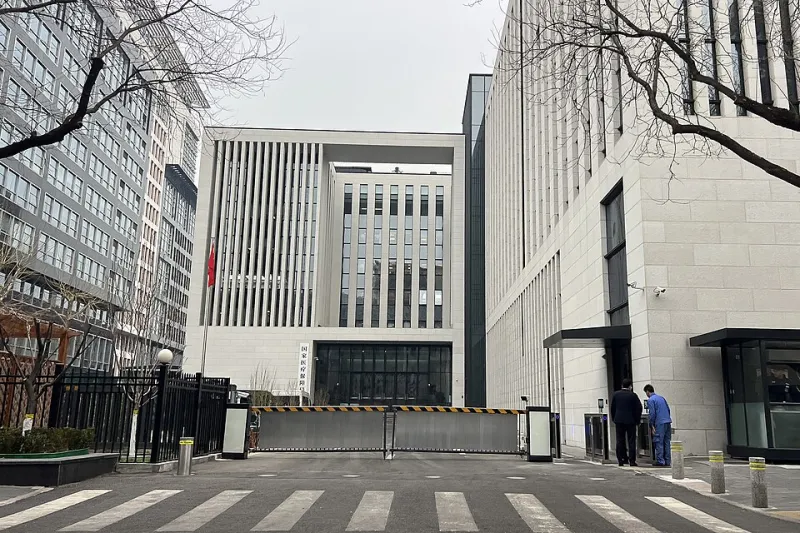
Photo: N509FZ, CC BY-SA 4.0, via Wikimedia Commons
Compliance certification has become one of the most trusted signals of enterprise security maturity. When a healthcare organization achieves HIPAA attestation, or a technology vendor completes a SOC 2 Type II audit, stakeholders reasonably interpret those designations as evidence that meaningful security controls are in place. In many respects, that interpretation is correct. Network segmentation, data encryption, access control policies, and incident response procedures all receive rigorous scrutiny under both frameworks.
But there is a dimension of the enterprise attack surface that neither framework was designed to evaluate — and that dimension is sound.
The acoustic environment inside a healthcare system, a financial services call center, or a regulated technology facility generates a continuous stream of sensitive information. Patient identifiers are spoken aloud during intake procedures. Authentication credentials are verbally confirmed over the phone. Privileged instructions are issued in rooms that, while physically secured, are acoustically permeable. None of this appears on a standard audit checklist. None of it is formally assessed during a HIPAA review or a SOC 2 examination. And for organizations that have invested heavily in achieving compliance, that omission represents a category of risk that is both genuine and largely invisible.
What the Frameworks Were Built to Protect
To understand the gap, it helps to understand the origin of both frameworks. HIPAA's Security Rule, finalized in 2003, was written primarily in response to the digitization of patient records. Its technical safeguards focus on electronic protected health information — ePHI — and the systems used to store, transmit, and access it. Physical safeguards under HIPAA address workstation security and facility access controls, but they are oriented toward preventing unauthorized access to devices and records, not toward mitigating the acoustic exposure of verbal communications.
SOC 2, developed by the American Institute of Certified Public Accountants, evaluates service organizations against five Trust Services Criteria: security, availability, processing integrity, confidentiality, and privacy. The security criterion focuses heavily on logical access controls, encryption standards, and change management procedures. Acoustic vulnerabilities — the risk that sensitive information transmitted verbally could be intercepted, recorded, or exploited — do not map cleanly onto any of these criteria, and auditors are not trained or incentivized to pursue them.
The result is a compliance architecture that is thorough within its own boundaries but structurally incapable of assessing the acoustic attack surface.
Where Acoustic Attackers Operate
The practical consequences of this gap are significant, particularly in healthcare environments where verbal communication is embedded in clinical workflows.
Consider the modern hospital system. Voice-enabled devices — from nurse call stations to AI-assisted diagnostic tools — are now standard infrastructure across many US health systems. These devices are always listening by design, but their acoustic security posture is rarely evaluated during compliance reviews. An attacker who gains proximity to a voice-enabled medical device, or who compromises the audio processing pipeline feeding that device, can potentially extract patient information without ever touching a database or triggering a network alert.
Call centers present a parallel vulnerability. Healthcare payers, pharmacy benefit managers, and patient services organizations routinely authenticate callers using voice-based verification workflows. When those workflows rely on static credentials — a date of birth, a member ID, a security question — they are susceptible to social engineering and replay attacks. When they rely on voice biometrics, the quality of those systems varies enormously, and many deployments have not been evaluated against adversarial acoustic inputs such as synthetic voice generation or recorded audio playback.
Secure facilities introduce yet another dimension. Executive briefing rooms, clinical consultation spaces, and financial advisory offices are frequently treated as physically secure because they require badge access or key entry. Physical security controls, however, do not address the acoustic properties of the space itself. Conversations conducted inside these rooms may be audible in adjacent areas, detectable through vibration-based listening techniques, or captured by devices that have been inadvertently introduced by authorized personnel.
The Auditor's Perspective and Its Limitations
Compliance auditors are not acoustic security specialists, and the current frameworks do not require them to be. A HIPAA auditor reviewing a healthcare organization's physical safeguards will assess whether workstations are positioned to prevent unauthorized viewing of ePHI — a requirement explicitly stated in the Security Rule. That same auditor has no corresponding requirement to assess whether voice communications in the same environment are adequately protected from interception.
SOC 2 auditors face a similar constraint. The framework is principles-based, which gives auditors some flexibility in how they evaluate controls, but the practical reality is that most engagements follow well-established templates. Acoustic security controls — room attenuation assessments, voice authentication robustness testing, ambient audio monitoring policies — are not part of those templates, and introducing them would require both auditor expertise and client readiness that currently do not exist at scale.
This is not a criticism of auditors or the frameworks themselves. Both HIPAA and SOC 2 reflect the threat landscape as it was understood when they were developed. The acoustic attack surface has expanded considerably since then, driven by the proliferation of voice-enabled devices, the normalization of remote and hybrid work, and the increasing sophistication of audio-based attack techniques.
Building the Missing Layer
For enterprise security leaders in healthcare and financial services, the path forward requires treating acoustic security as a distinct control domain rather than an afterthought within existing frameworks.
The first step is visibility. Organizations should conduct acoustic risk assessments that map the environments where sensitive verbal communications occur, identify the devices that process audio input, and evaluate the exposure of those environments to potential interception. This assessment should be integrated into the broader enterprise risk management process, not siloed within IT or facilities management.
The second step is authentication hardening. Voice-based authentication workflows — particularly those used in call center environments — should be evaluated against contemporary attack vectors, including synthetic voice generation and recorded audio replay. Acoustic biometric systems that incorporate liveness detection and environmental noise analysis provide significantly stronger resistance to these attacks than systems relying on static voice templates alone.
The third step is policy alignment. Organizations should develop internal standards for acoustic security that parallel their existing standards for data security. These policies should address room design requirements for sensitive conversations, protocols for voice-enabled device deployment, and procedures for investigating potential acoustic security incidents.
Finally, enterprise security leaders should engage proactively with their compliance auditors. While neither HIPAA nor SOC 2 currently mandates acoustic security controls, both frameworks contain sufficient flexibility for organizations to voluntarily document and demonstrate such controls as part of their overall security posture. Doing so positions the organization ahead of regulatory evolution and demonstrates a level of security maturity that goes beyond minimum compliance thresholds.
The Gap Will Not Close Itself
Compliance frameworks evolve slowly. The regulatory response to emerging threat vectors typically lags years behind the threat itself, and the acoustic attack surface is no exception. Organizations that wait for HIPAA amendments or SOC 2 criterion updates to address acoustic vulnerabilities are accepting a period of unmanaged exposure that may extend well into the next decade.
The more defensible posture is to recognize that compliance certification and genuine security are not synonymous — and to build controls that address the full scope of the enterprise attack surface, including the dimensions that current auditors are not equipped to evaluate. In healthcare and financial services, where the consequences of a breach extend beyond financial loss to patient safety and public trust, that distinction is not merely academic. It is a matter of organizational responsibility.
Acoustic security is not a niche concern. It is the missing layer in enterprise risk frameworks that were built for a different era — and the organizations that recognize that earliest will be the ones best positioned when the threat becomes impossible to ignore.