Stored, Regulated, and Forgotten: The Acoustic Data Retention Crisis Quietly Building Inside Your Compliance Program

Voice authentication has earned its place in the enterprise security stack. It offers friction-free identity verification, scales across distributed workforces, and integrates readily into existing authentication pipelines. What it does not come with, however, is a clear answer to a question that compliance officers are beginning to ask with growing urgency: how long are we allowed to keep this data, and what happens when the answer to that question depends on which regulator is asking?
The collision between acoustic biometric retention and modern data privacy law is not a theoretical concern. It is an active compliance risk that is maturing faster than most enterprise security programs are prepared to manage.
What Makes Acoustic Biometric Data Different
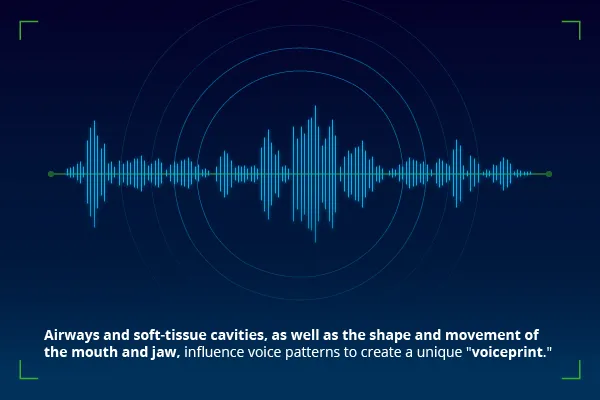
Not all authentication data carries the same regulatory weight. Passwords can be hashed and discarded. Tokens expire. But acoustic biometric data — the voiceprints, spectral signatures, and associated audio records that voice authentication systems generate — occupies a distinct and considerably more sensitive category under virtually every major privacy framework currently in force.
Under the California Consumer Privacy Act and its successor, the California Privacy Rights Act, biometric information is classified as sensitive personal information, triggering heightened disclosure obligations, opt-out rights, and strict limitations on secondary use. The Illinois Biometric Information Privacy Act goes further still, imposing a private right of action that has already produced substantial litigation exposure for organizations that failed to obtain proper written consent or establish adequate retention schedules.
At the federal level, while no single comprehensive biometric privacy statute yet exists, sector-specific frameworks — including HIPAA in healthcare and GLBA in financial services — impose data minimization principles that sit uneasily alongside the extended retention windows that security teams often prefer. And for enterprises operating with any meaningful European footprint, GDPR's classification of biometric data as a special category under Article 9 adds a layer of regulatory complexity that US-centric compliance programs frequently underestimate.
The cumulative effect is a patchwork of obligations that do not resolve neatly into a single retention policy. They conflict. And that conflict has operational consequences.
The Security Argument for Retention
Security teams have legitimate reasons for wanting to retain acoustic data over extended periods. Forensic investigation of authentication anomalies often requires access to historical voiceprint records. Detecting replay attacks, identifying gradual voice-spoofing patterns, and building behavioral baselines all benefit from longitudinal data sets. In regulated industries where audit trails must demonstrate the integrity of authentication events, acoustic records may constitute primary evidence in an investigation.
There is also the matter of model accuracy. Voice authentication systems improve with data. Enrollment records, correction events, and failed authentication attempts all contribute to the refinement of underlying models. Deleting this data prematurely can degrade system performance in ways that create their own security risks — a voice system that cannot accurately distinguish an enrolled user from an impersonator is not a security asset.
These are not trivial arguments. They represent genuine operational requirements that security architects have built their voice authentication deployments around. The problem is that privacy law does not recognize operational convenience as a valid basis for indefinite retention.
The Regulatory Argument for Deletion
The data minimization principle — the requirement that personal data be retained only as long as necessary for the specific purpose for which it was collected — is foundational to modern privacy regulation. Under GDPR, it is explicit and enforceable. Under CCPA and its amendments, it is implicit in the framework's structure of consumer rights and purpose limitations. Under BIPA, it is codified: biometric identifiers must be destroyed within three years of collection or within one year of the individual's last interaction with the organization, whichever comes first.
For enterprises that have deployed voice authentication across large employee populations or customer-facing channels, these deletion obligations are not trivial to execute. Acoustic data is rarely stored in a single, easily purged repository. It is distributed across authentication servers, backup systems, model training environments, and audit log archives. Identifying every instance of a given voiceprint record and confirming its complete deletion requires data mapping infrastructure that many organizations simply do not have.
The compliance exposure created by this gap is meaningful. BIPA litigation has already resulted in settlements measured in the tens of millions of dollars. GDPR enforcement actions involving biometric data mishandling have produced fines that, under the regulation's tiered structure, can reach four percent of global annual revenue. For a mid-sized enterprise, the financial consequences of a retention policy failure are not abstract.
Where Security and Compliance Diverge
The underlying tension is structural. Security programs are built around the principle of accumulation — more data, retained longer, enables better detection, faster investigation, and stronger forensic capability. Privacy regulation is built around the principle of minimization — less data, retained briefly, reduces exposure and respects individual rights.
Voice authentication sits precisely at the intersection of these two philosophies. It is simultaneously a security tool and a repository of highly sensitive biometric information. Managing it effectively requires both sets of principles to be honored, which is considerably more difficult than honoring either one in isolation.
Enterprises that have not yet formalized a biometric data governance program — one that includes explicit retention schedules, documented legal bases for continued storage, deletion verification procedures, and cross-jurisdictional compliance mapping — are operating with an unquantified liability embedded in their authentication infrastructure.
Building a Defensible Retention Framework
Addressing this risk requires collaboration between security, legal, privacy, and IT operations functions that does not always occur organically. Several practical steps can reduce exposure while preserving the security utility of acoustic data.
First, organizations should conduct a comprehensive audit of where acoustic biometric data currently resides across their environment. This includes not only primary authentication databases but also backup systems, training data repositories, and any third-party processors who handle voice data on the organization's behalf.
Second, retention schedules should be established for each data category, mapped explicitly to the legal basis for retention in each applicable jurisdiction. Where security requirements appear to demand longer retention than privacy law permits, legal counsel should be engaged to assess whether an alternative legal basis — such as a legitimate interests assessment under GDPR — can be documented and defended.
Third, deletion processes should be automated and verified. Manual deletion workflows introduce both operational risk and audit trail gaps. Automated purging, coupled with confirmation logging, provides the documentation necessary to demonstrate compliance in the event of a regulatory inquiry.
Finally, data minimization should be applied at the point of collection. If a voice authentication system can fulfill its security function using a derived mathematical representation of a voiceprint rather than a raw audio recording, the retention of the underlying audio may not be justifiable. Reducing the sensitivity of what is stored reduces the regulatory exposure associated with storing it.
The Compliance Clock Is Already Running
State-level biometric privacy legislation is expanding. Illinois, Texas, and Washington have established frameworks. New York, Maryland, and several other states have legislation under active consideration. The trajectory is clear: enterprises that deploy voice authentication will face an increasingly dense regulatory environment governing what they collect, how long they keep it, and what rights individuals hold over it.
The organizations that navigate this environment successfully will be those that treat acoustic data governance not as a compliance afterthought but as a foundational element of their authentication program design. The retention question is not one that can be deferred until regulators ask it. By that point, the answer will already be overdue.