Recorded and Replayed: Why Continuous Authentication Systems Are Losing the Battle Against Acoustic Impersonation
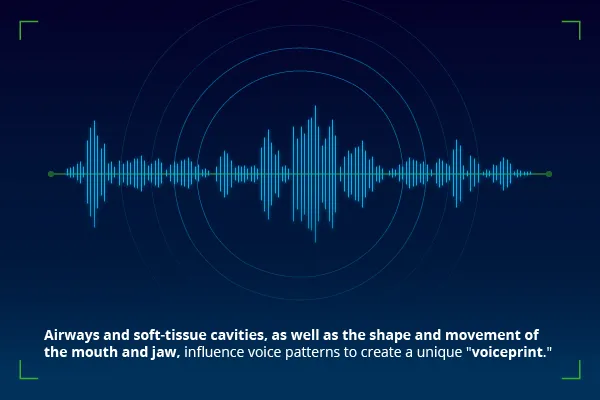
Enterprise security teams have invested heavily in continuous authentication as a safeguard against session hijacking and insider threats. The premise is straightforward: rather than verifying identity once at login, the system periodically—or constantly—re-validates the user through behavioral and acoustic signals throughout an active session. Voice biometrics, ambient sound patterns, and microphone-captured speech have all become inputs in these systems.
The premise is sound. The execution, however, has revealed a structural vulnerability that attackers are now actively exploiting.
Acoustic replay attacks—in which adversaries inject pre-recorded audio to satisfy continuous authentication checkpoints—represent a category of threat that most enterprise environments were not designed to detect. The distinction between defeating initial authentication and sustaining a spoofed session is more than technical nuance. It is the difference between a single breach event and an extended, undetected compromise.
The Mechanics of a Replay Attack Against Continuous Systems
Traditional replay attacks target login gates. An attacker captures a valid voice sample, plays it back at the authentication prompt, and gains initial access. Defenses against this model are relatively well-developed: liveness detection, challenge-response prompts, and temporal analysis of audio metadata have all been deployed with measurable success.
Continuous authentication introduces a different attack surface. Once an adversary has crossed the initial threshold—whether through a replay, a deepfake, or a stolen credential—the objective shifts. The goal is no longer to pass a single checkpoint. It is to remain authenticated across dozens or hundreds of micro-verification events that occur silently in the background during an active session.
This requires a different kind of audio arsenal. Rather than a single high-quality voice capture, the attacker needs a library of acoustic fragments: ambient room sounds, spontaneous speech snippets, breathing patterns, and environmental audio consistent with the target's typical working context. When stitched together and fed through an audio injection layer, these fragments can satisfy continuous authentication triggers without triggering anomaly detection.
The sophistication required is lower than most security teams assume. Consumer-grade audio editing tools, combined with commercially available voice synthesis platforms, are sufficient to construct convincing replay payloads. The real barrier is reconnaissance—gathering enough acoustic data about the target to assemble a believable profile. And in environments where employees routinely participate in recorded video calls, public webinars, and conference presentations, that barrier is shrinking.
Why Enterprise Defenses Have Lagged
The gap in enterprise readiness is partly a function of how continuous authentication was originally conceptualized. Most frameworks were designed to address session takeover by a third party who had not authenticated at all—a threat model focused on unauthorized presence rather than acoustic impersonation of an authorized user.
This framing led to detection logic built around behavioral discontinuities: a sudden change in typing cadence, an unusual application access pattern, or a geographic anomaly. Acoustic signals were incorporated as supporting inputs rather than primary threat vectors. The assumption was that if the voice matched the enrolled profile, the session was legitimate.
That assumption holds only if the system can reliably distinguish between a live voice and a high-fidelity recording of that voice. For many enterprise deployments, that capability is either absent or insufficiently calibrated for real-world operational conditions. Background noise suppression algorithms, intended to improve acoustic clarity, can inadvertently strip out the liveness artifacts—micro-variations in breath, laryngeal tension, and environmental resonance—that differentiate genuine speech from a replay.
The result is a detection gap that sits precisely at the intersection of the system's strengths and its architectural assumptions.
The Session Continuity Problem
What makes replay attacks against continuous authentication particularly damaging is their temporal dimension. A successful initial breach is a discrete event. A sustained replay attack is an ongoing compromise that may persist for hours or days without triggering alerts.
During that window, an adversary with authenticated session access can move laterally through enterprise systems, exfiltrate data, manipulate records, or conduct reconnaissance at a pace that overwhelms forensic reconstruction after the fact. The authentication logs will show a valid, continuously verified session. The anomaly, if detected at all, is likely to surface in a different system—a data loss prevention alert, an unusual API call volume, or a network traffic pattern—by which point the damage is already done.
This temporal exposure is compounded in environments where continuous authentication is treated as a compliance checkbox rather than an active security control. If the system is running but not monitored in near-real-time, the detection window collapses entirely.
Emerging Detection Approaches
The security research community has made meaningful progress on replay detection, and several approaches are beginning to find their way into enterprise-grade deployments.
Channel and device fingerprinting examines the acoustic signature of the audio pathway itself. Recordings made on a smartphone microphone and replayed through a laptop speaker carry detectable artifacts—frequency response curves, compression artifacts, and codec signatures—that differ from live speech captured on the same device. Detection engines trained on these channel-specific markers can flag injected audio with increasing accuracy, even when the voice content itself is convincing.
Dynamic challenge injection disrupts the replay attacker's ability to use pre-recorded libraries. By randomly requesting specific acoustic responses—a particular phrase, a tonal pattern, or a response to a real-time environmental cue—the system forces the attacker to generate novel audio on demand rather than replay cached fragments. When integrated with continuous authentication rather than applied only at login, this approach significantly raises the cost of sustaining a spoofed session.
Physiological liveness markers focus on acoustic signals that are difficult to synthesize without direct access to the speaker's physical state. Micro-variations in vocal fold vibration, subtle shifts in nasal resonance correlated with breathing rhythm, and the acoustic byproducts of involuntary muscular activity are all being explored as liveness indicators that resist replay. These signals are not yet reliably detectable in all acoustic environments, but their inclusion in multi-signal detection architectures meaningfully narrows the attack surface.
Temporal coherence analysis examines whether the acoustic environment remains consistent across a session in ways that are plausible for a live user. Abrupt shifts in room acoustics, inconsistent background noise patterns, or audio that lacks the gradual environmental drift typical of real-world sessions can indicate injection activity even when the voice content passes verification.
The Architectural Imperative
No single detection method is sufficient in isolation. Acoustic replay attacks are adaptive; as detection logic becomes public knowledge, adversaries refine their payloads to evade specific signatures. The appropriate response is a layered architecture in which acoustic liveness detection operates alongside behavioral analytics, device telemetry, and network-level signals—each layer capable of flagging anomalies independently, with correlated alerts triggering escalated scrutiny.
Enterprise security architects evaluating or upgrading continuous authentication infrastructure should treat replay resistance as a first-order requirement rather than a secondary consideration. Vendor assessments should include explicit testing against replay scenarios, including high-fidelity recordings, synthesized voice fragments, and channel-injected audio, under realistic operational conditions.
The systems that verify identity across the duration of a session are only as strong as their ability to distinguish between the person who authenticated and a recording of that person. Closing that gap is not a refinement of continuous authentication. It is the foundation on which its security guarantees actually rest.