Permanently Compromised: Why Voice Biometrics Represent Enterprise Authentication's Unresolvable Liability

In the world of enterprise security, nearly every credential type comes with a reset button. A stolen password can be changed in seconds. A compromised hardware token can be physically replaced. A breached certificate can be revoked and reissued before most attackers can act on it. These recovery mechanisms are so deeply embedded in security operations that most incident response playbooks treat them as foundational assumptions.
Voice biometrics do not offer that luxury.
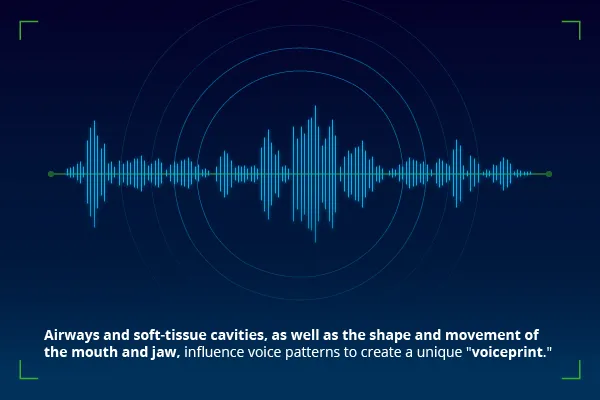
When an employee's voiceprint is extracted, cloned, or otherwise compromised, the underlying acoustic identity — the product of years of physiological development — cannot be altered. There is no administrative console that generates a new voice. There is no enrollment workflow that overwrites the old one in a meaningful way. The biometric itself remains what it has always been, and any system that relies on it remains exposed to whoever now holds a high-fidelity copy.
This is not a fringe concern. It is a structural characteristic of acoustic biometrics that US enterprise security teams have, by and large, failed to fully internalize — and the operational consequences of that oversight are becoming increasingly difficult to ignore.
The Difference Between Revocation and Recovery
Security practitioners often conflate two distinct concepts: revocation and recovery. In credential-based systems, these processes are nearly synonymous. Revoking a compromised password effectively recovers security posture because the original credential no longer grants access. The threat is neutralized at the moment of revocation.
Biometric systems break this equivalence entirely.
An enterprise can remove a voiceprint from its authentication database. It can disable voice-based login for a specific user. It can even migrate that user to an alternative authentication method. But none of these actions revoke the biometric itself. The acoustic signature continues to exist in the world — potentially in the hands of an adversary — and any other system, application, or platform that still relies on that individual's voice remains vulnerable. Recovery, in the traditional sense, is not possible. What organizations can achieve is containment, and there is a profound operational difference between the two.
How Acoustic Identity Theft Compounds Over Time
The persistence problem is further complicated by the nature of modern acoustic data collection. High-quality voiceprints can be synthesized from relatively brief audio samples — recordings captured during phone calls, video conferences, public presentations, or even ambient conversations in shared workspaces. Once that synthesis has occurred, the adversary's asset does not degrade. It does not expire. It can be stored indefinitely and deployed against new systems as they are introduced.
This creates a compounding exposure dynamic that is unlike almost anything else in enterprise security. A password stolen in 2019 is effectively worthless today. A voiceprint stolen in 2019 may be just as operationally useful against a newly deployed voice authentication system in 2025. The breach, in a meaningful sense, never closes.
For enterprises operating in regulated industries — financial services, healthcare, government contracting — this temporal persistence carries significant compliance implications. Incident response frameworks built around the assumption of credential revocability may not satisfy regulatory expectations when the compromised credential is an acoustic identity that cannot be revoked.
The Enrollment Paradox
Some security architects have proposed re-enrollment as a partial mitigation: if a voiceprint is compromised, the user re-enrolls and the system learns a new baseline. This approach has surface-level appeal but collapses under scrutiny.
Re-enrollment does not change the underlying voice. It generates a new reference template, but that template is derived from the same immutable acoustic source. A sophisticated adversary who has already captured sufficient voice data can, in many cases, synthesize audio that matches the re-enrolled template just as effectively as the original. The enrollment process creates an administrative record of change; it does not create a genuinely new credential.
Furthermore, re-enrollment introduces its own attack surface. The window between compromise detection and re-enrollment completion is an operational gap that adversaries can exploit, particularly in large enterprises where coordinating re-enrollment across a distributed workforce is logistically complex.
Building Incident Response Frameworks for Irrevocable Compromise
Given these constraints, enterprises dependent on voice authentication need incident response protocols designed specifically for the reality of permanent exposure — not adapted from frameworks built for revocable credentials.
Several principles should anchor that redesign.
Assume persistence, not remediation. Incident response documentation should explicitly acknowledge that a compromised voiceprint remains a live threat asset indefinitely. Response plans should focus on limiting the blast radius of that asset rather than assuming it can be neutralized.
Implement layered authentication with rapid substitution pathways. Voice should function as one factor within a multi-modal authentication architecture, never as a sole or primary credential. When a voiceprint compromise is suspected or confirmed, the organization must be able to shift authentication weight to other factors — hardware tokens, behavioral biometrics, or contextual signals — without disrupting business operations. That substitution pathway must be pre-built and tested, not improvised during an active incident.
Establish continuous monitoring rather than point-in-time verification. Because compromised voiceprints can be deployed at any time, including months or years after initial theft, authentication systems should incorporate ongoing behavioral and acoustic anomaly detection. A successful voice match should not, by itself, be sufficient to grant persistent access to high-value systems.
Maintain a breach registry with long-term threat tracking. Security operations teams should maintain records of confirmed or suspected voiceprint compromises and treat those records as active threat intelligence — not closed incidents. Any new system deployment that incorporates voice authentication should be evaluated against this registry before rollout.
Engage legal and compliance counsel proactively. The irrevocability of biometric compromise has implications that extend well beyond technical security. US state-level biometric privacy laws — including Illinois' Biometric Information Privacy Act and similar statutes emerging across other states — impose specific obligations around biometric data handling and breach notification. Legal counsel should be involved in incident response planning, not summoned after a breach has already occurred.
Rethinking the Strategic Role of Voice in Enterprise Authentication
None of this analysis argues that voice biometrics are without value in enterprise authentication. Acoustic identity offers genuine advantages in specific deployment contexts — particularly where hands-free interaction, accessibility requirements, or user experience considerations make other authentication methods impractical.
But the strategic deployment of voice biometrics demands an honest accounting of their limitations. The inability to revoke a compromised voiceprint is not a product defect that vendors will eventually patch. It is an inherent property of biometric authentication, one that requires organizations to build compensating controls, contingency architectures, and incident response capabilities that are structurally different from those designed for revocable credentials.
Enterprises that treat voice authentication as a drop-in replacement for passwords — inheriting password-era security assumptions along with the technology — are not simply making a technical miscalculation. They are building incident response plans that will fail at precisely the moment they are needed most.
The acoustic signature cannot be changed. The security architecture around it must be.