Your Office Has a Fingerprint Attackers Are Already Reading

The Building Itself Has Become an Attack Surface
Enterprise security teams have spent years hardening credentials, tightening network perimeters, and deploying multi-factor authentication across distributed workforces. What fewer organizations have considered is that the physical environment in which authentication occurs—the hum of a data center cooling unit, the low-frequency drone of a downtown Manhattan office tower's ventilation stack, the particular reverb signature of a glass-walled conference room in Austin—constitutes its own form of identity. And that identity is being read.
Modern voice authentication and acoustic biometric systems do not operate in a vacuum. When an employee authenticates via voiceprint, the system does not receive a clean, isolated vocal sample. It receives a composite signal: voice layered over environmental noise, shaped by the acoustic properties of the room, colored by whatever machinery, infrastructure, or ambient activity surrounds the speaker. For years, this was treated as interference to be filtered out. Security researchers and a growing cohort of sophisticated threat actors now understand it differently—as information.
The acoustic characteristics of a specific enterprise environment are, in many cases, more stable and more reproducible than the biometric signals security systems were designed to protect.
How Environmental Acoustic Fingerprinting Works in Practice
The concept of acoustic fingerprinting is not new. Music recognition applications have relied on it for over two decades. What is new is its deliberate application as an attack vector against enterprise authentication infrastructure.
Attackers operating in this space begin with collection. A compromised endpoint device—a laptop, a smart conference room speaker, an IoT sensor with inadequate security controls—can silently record ambient audio over an extended period. From this raw material, machine learning models extract what researchers have begun calling an environmental acoustic profile: a statistical representation of the noise floor, dominant frequency patterns, temporal rhythms, and spatial characteristics unique to a given physical space.
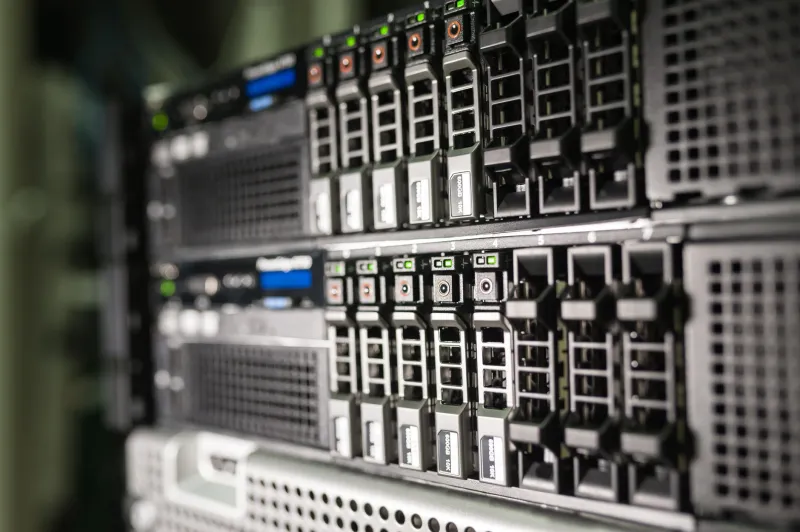
HVAC systems are particularly valuable to this process. Industrial and commercial climate control equipment generates highly consistent low-frequency signatures that vary predictably by manufacturer, installation age, and building type. Electrical infrastructure—transformers, UPS systems, fluorescent or LED lighting arrays—contributes its own harmonic content. Even the density of occupancy at different hours of the day creates recognizable patterns that a sufficiently trained model can associate with a specific location.
Once this profile is established, it can be used in two primary ways. First, it can serve as a contextual authenticator in reverse—an attacker who possesses a stolen voiceprint can layer the appropriate environmental signature over a synthesized audio sample, making a spoofed authentication attempt appear to originate from a known, trusted physical location. Second, it can be used to defeat liveness detection systems that rely on environmental consistency as a secondary validation signal, by accurately mimicking the acoustic context those systems expect.
Why This Threat Model Is Fundamentally Different
Conventional biometric attack vectors focus on the credential itself. Deepfake voice synthesis, replay attacks, and adversarial audio manipulation all target the vocal characteristics of the individual being impersonated. Countermeasures have evolved accordingly: liveness detection, behavioral analysis, continuous re-authentication, and anti-spoofing classifiers have all been developed in direct response to credential-level threats.
Environmental acoustic fingerprinting operates at a different layer. It does not attack the credential. It attacks the contextual legitimacy that authentication systems use to validate the credential's origin. This distinction matters enormously for enterprise security architecture.
A system designed to ask "does this voice match the enrolled user?" may answer correctly. A system designed to ask "does this authentication attempt look like it came from where it should have come from?" may also answer correctly—because the attacker has successfully replicated both the vocal signature and the environmental context. The combination of these two factors can defeat layered defenses that were never designed to be evaluated together.
This is not a theoretical vulnerability. Academic research published over the past several years has demonstrated that environmental audio cues can be reliably extracted from recordings made through consumer-grade microphones, and that the resulting profiles are stable enough to enable location identification with meaningful accuracy. The operational leap from academic proof-of-concept to enterprise attack tool is not large.
The Inventory Problem: Most Enterprises Cannot Map What They Have Not Measured
One of the most significant challenges this threat presents is the near-universal absence of acoustic environmental inventories within enterprise security programs. Organizations routinely catalog their software assets, their network endpoints, their access control hardware. Very few have conducted any systematic effort to characterize the acoustic properties of the spaces in which authentication occurs.
This gap is not merely a technical oversight. It reflects a broader conceptual blind spot: the assumption that the physical environment is a passive backdrop to security operations rather than an active component of the attack surface. That assumption no longer holds.
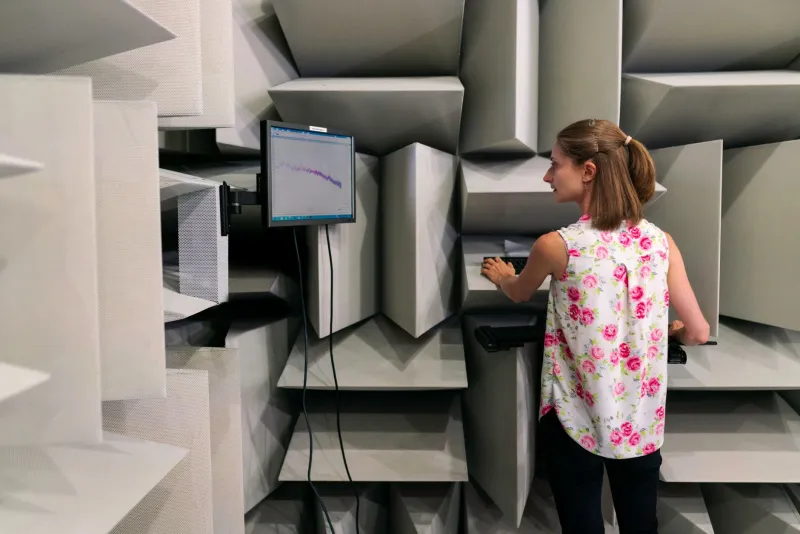
An acoustic environmental inventory does not require exotic equipment or specialized expertise beyond what is now commercially available. It does require deliberate methodology: measuring ambient noise floors across spaces where authentication devices are deployed, documenting the frequency signatures of major infrastructure systems, identifying locations where environmental consistency is high enough to generate a reliable fingerprint, and flagging spaces where unauthorized recording devices could collect sufficient data to build an exploitable profile.
This inventory becomes the foundation for a more sophisticated risk assessment. Spaces with highly distinctive and stable acoustic signatures—server rooms, dedicated executive suites, specific conference facilities—represent higher-value targets for environmental fingerprinting attacks because their profiles are both easier to capture and more reliably reproduced.
What a Defensible Acoustic Security Posture Actually Requires
Addressing this threat category demands action on several fronts simultaneously.
Authentication system architecture should be reviewed for its reliance on environmental consistency as a secondary validation signal. Where such reliance exists, it should be treated as a potential vulnerability rather than an additional control—particularly in environments where the physical space is well-known to potential adversaries, such as enterprise facilities with significant visitor traffic or contractor access.
Endpoint security programs must account for the recording capabilities of devices deployed in sensitive spaces. IoT sensors, smart room systems, and unified communications hardware all represent potential collection points. Access controls, firmware integrity monitoring, and network segmentation for these devices should reflect their acoustic data exposure, not merely their data processing functions.
Authentication infrastructure vendors should be engaged directly on the question of environmental acoustic modeling. Organizations evaluating voice biometric or acoustic authentication platforms should require explicit documentation of how those systems handle environmental noise—whether as a filtered variable, a secondary signal, or an unaddressed factor—and what testing has been conducted against environmental spoofing scenarios.
Finally, red team exercises and penetration testing programs should be expanded to include acoustic attack simulations. Testing whether an authentication system can be defeated by a replay of a synthesized voice layered with the correct environmental signature is a technically achievable exercise that most enterprise security teams have not yet commissioned.
The Competitive Disadvantage of Inaction
The organizations most exposed to environmental acoustic fingerprinting attacks are those that have invested most heavily in voice biometric and acoustic authentication technologies without extending their security thinking to the physical environments those technologies depend upon. The sophistication of the authentication layer does not protect against an attack that operates at a different level of the stack.
Enterprise security leadership in the United States is navigating an increasingly complex threat landscape. The addition of environmental acoustic exploitation to that landscape is not a distant possibility—it is a present and underappreciated reality. The organizations that respond with structured inventory, architectural review, and expanded testing protocols will be measurably better positioned than those that continue to treat the ambient soundscape of their facilities as irrelevant to their security posture.
The building has always had a voice. The question is who is listening to it.