Manufactured Vulnerabilities: How the Authentication Hardware Supply Chain Is Quietly Delivering Voice Theft at Scale
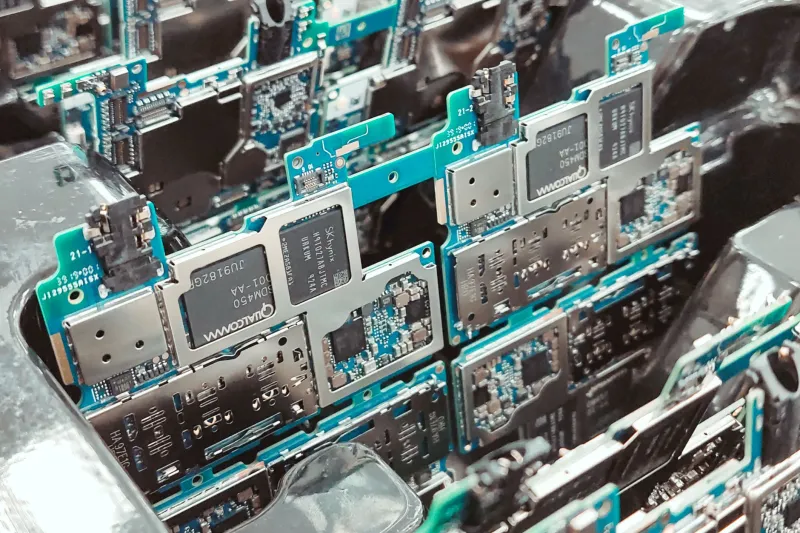
The enterprise security conversation around acoustic biometrics tends to focus on what happens after deployment—replay attacks, deepfake voice synthesis, adversarial audio inputs. Yet a growing body of evidence suggests that some of the most consequential vulnerabilities in voice authentication infrastructure are introduced not during operation, but during manufacture. By the time a microphone array or voice processing unit reaches an enterprise loading dock, it may already be performing functions its buyer never authorized.
This is the acoustic supply chain problem, and it remains almost entirely outside the scope of conventional vendor security audits.
The Anatomy of a Compromised Hardware Pipeline
Modern acoustic biometric hardware is rarely the product of a single manufacturer. A finished enterprise voice authentication terminal typically incorporates microphone sensors from one supplier, digital signal processing chips from another, firmware developed by a third party, and final assembly conducted in facilities that may span multiple countries. Each of those handoffs represents an opportunity for interference.
The most technically sophisticated attacks target firmware—the low-level software that governs how a microphone captures and pre-processes audio before it ever reaches the authentication engine. Firmware modifications can be extraordinarily subtle. A compromised firmware build may function identically to its legitimate counterpart under normal operating conditions while silently buffering short segments of captured audio and transmitting them through covert channels during routine network activity.
In documented cases examined by hardware security researchers, such modifications have been introduced not by external attackers but by personnel within contract manufacturing facilities—individuals with authorized access to firmware signing systems who were either coerced or compensated to introduce specific code changes before devices were shipped to distributors.
Why Traditional Vendor Audits Miss the Problem
Most enterprise procurement processes include some form of vendor security assessment. These assessments typically evaluate a supplier's information security policies, data handling practices, and compliance certifications. What they rarely include is a technical inspection of the hardware itself.
The gap is structural. Vendor audits are designed to evaluate organizational security posture, not to detect firmware-level tampering in physical devices. Auditors reviewing a hardware manufacturer's SOC 2 report will find attestations about access controls and change management procedures. They will not find evidence of a firmware build that was modified after those controls were applied.
Binary firmware analysis—comparing a deployed device's firmware against a known-good cryptographic hash of the original build—is technically straightforward but operationally uncommon. Most enterprise IT teams lack both the tooling and the institutional mandate to perform this kind of hardware verification at scale. As a result, compromised devices pass through procurement, deployment, and routine maintenance cycles without detection.
The Voiceprint Exfiltration Scenario
The consequences of compromised acoustic hardware are particularly severe in voice authentication contexts because the data being captured is biometric and permanent. Unlike passwords or access tokens, a voiceprint cannot be reset. Once an attacker has acquired a sufficiently detailed acoustic profile of an executive, a privileged administrator, or a financial approver, that profile retains its value indefinitely.
Consider the operational reality of a large financial services firm deploying voice authentication terminals across dozens of branch locations. Each terminal captures and processes voiceprint data from hundreds of users daily. A firmware-level compromise that buffers even a small fraction of that audio—fragments too short to trigger anomaly detection but sufficient to reconstruct enrollment templates—would, over weeks or months of operation, quietly accumulate a voiceprint repository of extraordinary value.
Exfiltration channels for this kind of data are similarly difficult to detect. Compromised firmware can encode captured audio into traffic patterns that resemble routine device telemetry, leveraging existing network connections to transmit data without generating the volume anomalies that intrusion detection systems are calibrated to flag.
Distribution Channel Tampering: The Overlooked Vector
Firmware-level compromise during manufacturing is not the only supply chain threat. Physical devices can also be intercepted and modified during distribution—a practice sometimes referred to as interdiction. In the context of acoustic biometric hardware, interdiction attacks may involve opening sealed shipments, replacing legitimate firmware with compromised builds, and resealing packaging to eliminate visible evidence of tampering.
This threat is not hypothetical. Security researchers and government agencies have documented interdiction attacks against networking hardware for more than a decade. The same techniques apply to any device that processes sensitive data, and acoustic authentication terminals—devices that will ultimately capture the voices of an organization's most privileged users—represent high-value targets.
Enterprise security teams that source hardware through gray-market channels, secondary distributors, or international resellers face elevated risk. Even organizations that purchase directly from authorized distributors cannot fully eliminate the risk without implementing hardware verification protocols at the point of receipt.
Building a Hardware-Aware Acoustic Security Program
Addressing supply chain vulnerabilities in acoustic biometric hardware requires extending enterprise security thinking upstream—past the software layer and into the physical devices themselves.
Several practices can meaningfully reduce exposure. Cryptographic firmware verification at device deployment, using hashes provided directly by the original equipment manufacturer through an authenticated channel, allows organizations to confirm that installed firmware matches the authorized build. This process can be automated and integrated into device provisioning workflows without significant operational overhead.
Hardware attestation frameworks—technologies that allow a device to cryptographically prove the integrity of its firmware to a remote verification service—are increasingly available in enterprise-grade acoustic hardware. Procurement specifications should require attestation capability as a baseline, and deployment processes should validate attestation before any device is permitted to enroll users or capture biometric data.
Supply chain visibility also matters. Organizations should document the full provenance of deployed acoustic hardware, including manufacturing origin, firmware version history, and distribution pathway. This documentation supports both incident response and regulatory compliance, and creates an audit trail that makes supply chain tampering significantly harder to conceal over time.
The Regulatory Dimension
US regulators are increasingly attentive to hardware supply chain security, particularly for infrastructure that processes biometric data. The Federal Acquisition Regulation and associated guidance from the Cybersecurity and Infrastructure Security Agency address supply chain risk management for federal contractors, and similar frameworks are beginning to influence commercial sector expectations.
For enterprises in regulated industries—financial services, healthcare, critical infrastructure—the failure to implement hardware-level verification for biometric authentication devices may increasingly be viewed as a compliance gap rather than simply an operational oversight. Security teams should anticipate that audit frameworks will evolve to address this dimension of acoustic authentication risk.
The devices organizations trust to verify identity must themselves be trustworthy. Establishing that trust requires looking beyond certifications and into the hardware itself—before the first voice is ever captured.