From Microphone to Vulnerability: The Case for Acoustic Hardware Provenance in Enterprise Authentication
There is a question that most enterprise security teams have never asked about their voice authentication infrastructure, and the answer to it matters considerably more than most organizations currently appreciate: can you verify, with cryptographic certainty, that the microphone capturing your executives' voiceprints is the microphone your vendor shipped, running the firmware your vendor intended, and storing data only where your contract specifies?
For the overwhelming majority of enterprises, the honest answer is no. And that answer represents a structural vulnerability in the acoustic authentication supply chain that the industry has been slow to acknowledge and slower still to address.
The Supply Chain Problem in Acoustic Hardware
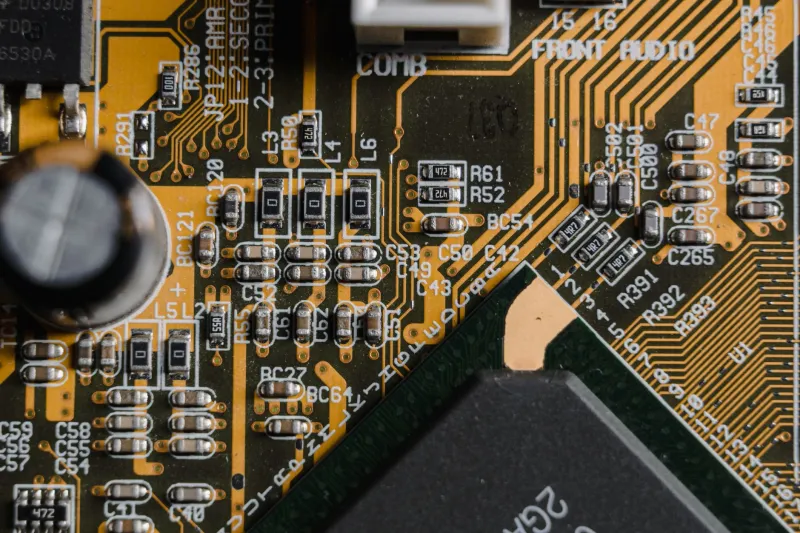
The hardware components that constitute an enterprise acoustic authentication system—microphones, analog-to-digital converters, signal processing chips, embedded firmware, and the storage systems that retain voiceprint data—pass through a complex global supply chain before they arrive at a corporate facility. Manufacturing may occur in one country, firmware development in another, assembly in a third, and distribution through a network of resellers and integrators that adds additional handling stages at each step.
At any point in that chain, a motivated adversary with the right access can introduce modifications that are invisible to the enterprise deploying the finished product. A microphone with altered firmware might capture audio at higher fidelity than specified, retaining ambient sound beyond the authentication event window. A signal processing component with a hardware implant could transmit acoustic data to an unauthorized endpoint. A storage module with modified access controls might allow voiceprint data to be retrieved by parties outside the enterprise's knowledge.
These are not hypothetical scenarios drawn from threat modeling exercises. Hardware supply chain compromises have been documented across multiple technology sectors, and the acoustic hardware category—less scrutinized than network infrastructure or computing hardware—presents an attractive target for adversaries who have found higher-profile supply chains increasingly hardened against this class of attack.
Why Acoustic Hardware Receives Less Scrutiny
The enterprise security community has devoted significant attention to supply chain risk in recent years, particularly following high-profile incidents involving network infrastructure components and server hardware. That attention has produced meaningful improvements in hardware verification practices for those categories. Acoustic hardware has largely escaped equivalent scrutiny, for reasons that are worth examining.
Microphones and audio processing components are typically classified as peripheral or ancillary hardware rather than core security infrastructure, even when they are directly embedded in authentication systems. Procurement teams that apply rigorous supply chain verification requirements to firewall appliances and authentication servers often apply commodity hardware standards to the microphones feeding those systems.
This classification error has consequences. The microphone in a voice authentication kiosk is not a peripheral device—it is the initial capture point for biometric data that will be stored, processed, and used to make high-stakes access decisions. Its integrity is foundational to the integrity of the entire authentication chain. Treating it as commodity hardware means treating the entry point of your biometric pipeline as an unverified component.
Firmware complexity compounds this problem. Modern microphone and audio processing hardware runs sophisticated embedded software that can be updated remotely, often without enterprise visibility. An original equipment manufacturer firmware update delivered through a compromised vendor update channel can alter the behavior of deployed acoustic hardware without any physical access to the enterprise facility.
The Absence of Industry Standards
Unlike computing hardware categories that have benefited from industry consortia and standards bodies developing supply chain security frameworks—the Trusted Computing Group and its Trusted Platform Module specifications being the most prominent example—acoustic hardware operates without equivalent provenance standards.
There is currently no widely adopted framework requiring acoustic hardware manufacturers to implement cryptographic attestation of component identity. There is no industry-standard mechanism for enterprises to verify that deployed acoustic components match their documented specifications. There is no established audit trail requirement that would allow forensic reconstruction of a component's handling history between manufacturing and deployment.
This standards vacuum means that enterprises seeking to implement acoustic hardware provenance verification must currently do so through contractual requirements imposed on individual vendors—a fragmented approach that lacks the consistency and enforceability of a formal standard and places the burden of framework development on each enterprise independently.
A Framework for What Enterprises Should Demand Today
In the absence of industry standards, enterprises that take acoustic hardware provenance seriously can establish their own requirements through procurement specifications and vendor contracts. The following framework represents a baseline for what rigorous acoustic hardware provenance should entail.
Cryptographic component identity: Every acoustic hardware component deployed in an authentication system should carry a cryptographically verifiable identity—a hardware-anchored certificate that can be validated against a manufacturer-maintained registry at the time of deployment and at regular intervals thereafter. Components that cannot present a valid identity certificate should not be deployed in authentication infrastructure.
Firmware integrity verification: Acoustic hardware vendors should provide cryptographically signed firmware images, and enterprises should implement verification processes that confirm firmware integrity before and after any update event. Automatic firmware updates that bypass enterprise verification should be contractually prohibited.
Chain of custody documentation: Vendors and distributors should maintain documented chain of custody records for acoustic hardware components from manufacturing through delivery. These records should be available to enterprise customers and should be verifiable against manufacturer records.
Tamper-evident packaging and physical inspection: Hardware delivered for deployment in authentication systems should arrive in tamper-evident packaging, and enterprises should implement physical inspection protocols that verify packaging integrity before deployment.
Ongoing behavioral monitoring: Deployed acoustic hardware should be subject to behavioral monitoring that can detect anomalies consistent with firmware modification or unauthorized data transmission—network traffic analysis for audio processing components, and audit log review for storage systems.
The Regulatory Horizon
The regulatory environment in the United States is moving, albeit slowly, toward greater supply chain security requirements for critical infrastructure technology. Executive orders addressing supply chain security and emerging guidance from the Cybersecurity and Infrastructure Security Agency have established a policy direction that will eventually produce more specific requirements for hardware provenance across technology categories.
Enterprises that build acoustic hardware provenance requirements into their procurement and deployment practices now will be better positioned to demonstrate compliance when those requirements become formal mandates—and better protected against supply chain compromises in the interim.
Provenance as a Competitive Differentiator
For acoustic hardware vendors and authentication platform providers, hardware provenance capabilities represent an emerging competitive differentiator. Enterprise customers that understand supply chain risk are beginning to ask questions that vendors without provenance infrastructure cannot answer satisfactorily.
Vendors that invest in cryptographic attestation capabilities, verifiable chain of custody documentation, and firmware integrity verification will find those investments increasingly valued in enterprise procurement decisions. The market signal is moving in a clear direction—and the vendors who lead on provenance will capture the customers who have learned, sometimes through difficult experience, that assumed trust in hardware components is not a sustainable security posture.
The acoustic authentication supply chain runs from a microphone on a conference room wall to a voiceprint database holding the biometric identities of an organization's most sensitive personnel. Every link in that chain deserves verification. The enterprises that insist on it will be the ones that can answer the provenance question with confidence.